Membrane Distillation Explained: Separation Technologies, Membrane Systems, Process Equipment, Global Manufacturers, Suppliers and Industrial Applications
Membrane distillation is a thermally driven membrane separation technology used to separate water from dissolved salts and other non-volatile components. Unlike pressure-driven membrane processes such as reverse osmosis, membrane distillation uses a temperature difference across a hydrophobic membrane to create a vapor-pressure gradient.
The technology has applications in desalination, industrial wastewater treatment, resource recovery, and high-salinity water processing.
What Is Membrane Distillation?
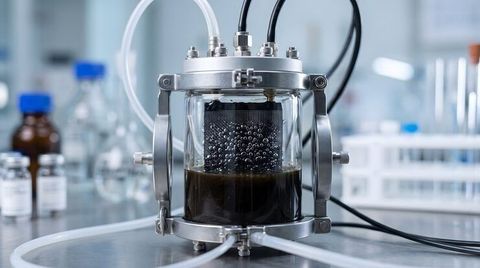
Membrane distillation is a separation process in which a hydrophobic microporous membrane allows water vapor to pass through its pores while generally preventing liquid water and dissolved non-volatile substances from crossing.
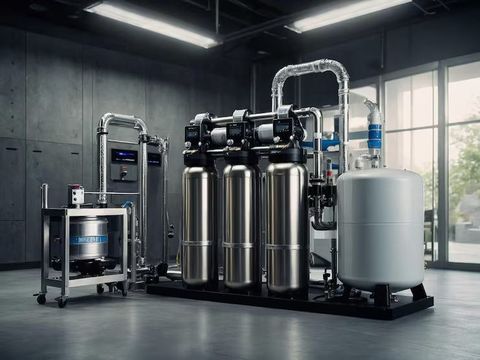
A typical system contains:
Feed-water circulation equipment
Heating equipment
Hydrophobic membrane modules
Pumps
Heat exchangers
Condensation systems
Temperature sensors
Flow controls
Product-water collection systems
The membrane itself does not act like a conventional filter that separates dissolved salts by pore-size exclusion. Instead, vapor passes through the membrane because of a difference in vapor pressure created by temperature conditions.
How Membrane Distillation Works
The process begins with a warm feed stream containing water and dissolved substances. One side of a hydrophobic membrane is exposed to the heated feed.
The temperature difference creates a vapor-pressure gradient. Water evaporates at the membrane interface, and the resulting vapor travels through the membrane pores toward the cooler side.
The vapor then condenses and forms a purified water stream.
Unlike conventional laboratory distillation, membrane distillation uses a membrane as the vapor-transfer interface rather than a traditional boiling flask and condenser arrangement.
Major Membrane Distillation Configurations
Direct Contact Membrane Distillation
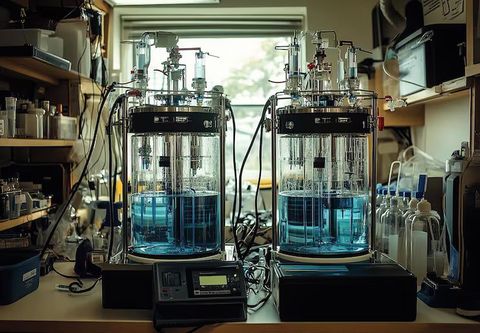
In direct contact membrane distillation (DCMD), the hot feed contacts one side of the membrane while a cooler liquid stream contacts the opposite side. Water vapor crosses the membrane and condenses directly in the cooler liquid.
Air Gap Membrane Distillation
In air gap membrane distillation (AGMD), an air layer separates the membrane from the condensation surface. Water vapor crosses the membrane and travels through the air gap before condensing.
Vacuum Membrane Distillation
Vacuum membrane distillation (VMD) applies reduced pressure on the permeate side. This configuration can support vapor transport and external condensation.
Sweeping Gas Membrane Distillation
In sweeping gas membrane distillation (SGMD), an inert gas flows along the permeate side and carries water vapor away from the membrane.
Each configuration involves different heat-transfer, mass-transfer, condensation, and system-design considerations.
Membrane Materials and Systems
Membrane performance is influenced by material properties, pore structure, surface characteristics, thickness, and hydrophobicity.
Common membrane materials investigated or used in membrane-distillation systems include:
Polypropylene
Polytetrafluoroethylene
Polyvinylidene fluoride
Membrane modules can be configured in different geometries depending on system capacity and process requirements.
Important membrane characteristics include:
Hydrophobicity
Pore size
Porosity
Membrane thickness
Thermal resistance
Chemical compatibility
Mechanical stability
Major Membrane Distillation Equipment
| Equipment | Primary Function | Typical Role |
|---|---|---|
| Membrane Module | Provides vapor-transfer interface | Separation |
| Feed Pump | Circulates feed water | Fluid handling |
| Heater | Raises feed temperature | Thermal input |
| Heat Exchanger | Transfers thermal energy | Heat recovery |
| Vacuum Pump | Creates permeate-side vacuum | VMD systems |
| Condenser | Condenses water vapor | Product recovery |
| Flow Meter | Measures circulation | Process monitoring |
| Temperature Sensor | Monitors thermal conditions | Process control |
| Pressure Sensor | Monitors system pressure | Control and safety |
| Storage Tank | Holds feed or product water | Process storage |
Membrane Distillation Process
An industrial membrane-distillation system generally operates through several interconnected stages.
1. Feed Preparation
The incoming water may undergo pretreatment to remove suspended solids, oils, biological material, or other contaminants that could affect membrane performance.
2. Heating
The feed stream is heated using thermal energy from boilers, heat exchangers, industrial waste heat, solar thermal systems, or other sources.
3. Membrane Contact
The heated feed flows along the membrane surface. Because the membrane is hydrophobic, liquid water is generally prevented from entering the membrane pores under appropriate operating conditions.
4. Vapor Transport
Water vapor moves through the membrane pores due to the vapor-pressure difference between the feed and permeate sides.
5. Condensation
The water vapor is condensed to produce a purified water stream.
6. Concentrate Management
Non-volatile dissolved substances remain primarily in the feed-side stream, increasing its concentration as water is removed.
7. Heat Recovery
Industrial systems can incorporate heat exchangers to recover thermal energy from outgoing streams and reduce overall energy requirements.
Advantages and Process Considerations
Membrane distillation has several characteristics that distinguish it from pressure-driven membrane processes.
High Salt Rejection Potential
Because the primary transport mechanism is vapor transfer, non-volatile salts generally do not pass through the membrane with the water vapor under appropriate operating conditions.
Lower Operating Pressure
Unlike reverse osmosis, membrane distillation does not require extremely high hydraulic pressure across the membrane.
Thermal Energy Utilization
The process can potentially use low-grade heat, industrial waste heat, or renewable thermal energy sources, depending on system design.
High-Salinity Feed Streams
Membrane distillation can be investigated for applications involving concentrated saline streams where conventional pressure-driven systems face operational limitations.
However, energy consumption, membrane wetting, scaling, fouling, heat losses, and system integration remain important engineering considerations.
Industrial Applications
Desalination
Membrane distillation can be used to produce fresh water from saline or seawater streams under suitable operating conditions.
Industrial Wastewater Treatment
Certain industrial wastewater streams with high dissolved-solids concentrations can be considered for membrane-distillation treatment.
Zero Liquid Discharge Systems
Membrane distillation can form part of integrated treatment systems designed to recover water and concentrate residual streams.
Brine Concentration
The technology can support concentration of saline streams before additional treatment or resource-recovery stages.
Resource Recovery
Depending on the feed composition and process configuration, membrane distillation can be integrated into systems designed to recover water while concentrating valuable or recoverable components.
Global Manufacturers and Suppliers
The membrane-distillation market includes membrane manufacturers, module developers, water-treatment technology companies, research-driven technology providers, and system integrators.
When evaluating manufacturers and suppliers, important considerations include:
Membrane material
Module configuration
Feed-water characteristics
Operating temperature
Thermal-energy source
Required water recovery
Membrane replacement requirements
Pretreatment requirements
Heat-recovery design
System automation
Supplier selection should be based on the specific feed composition, operating conditions, required capacity, and intended application.
How to Select a Membrane Distillation System
Feed composition: Analyze salinity, suspended solids, organic compounds, scaling species, and other contaminants.
Temperature requirements: Determine available thermal energy and the temperature range suitable for the selected membrane and system.
Membrane compatibility: Ensure the membrane material is compatible with the feed chemistry and operating conditions.
System configuration: Choose among DCMD, AGMD, VMD, SGMD, or other configurations based on process objectives.
Heat recovery: Evaluate opportunities to recover heat from concentrate and product streams.
Pretreatment: Determine whether filtration, clarification, chemical treatment, or other pretreatment is necessary.
Scaling and fouling control: Consider cleaning procedures and operating strategies that reduce membrane-performance degradation.
Automation: Temperature, flow, pressure, conductivity, and other parameters can be monitored using automated control systems.
Frequently Asked Questions
What is membrane distillation?
Membrane distillation is a thermally driven separation process where water vapor passes through a hydrophobic microporous membrane while dissolved non-volatile substances are retained on the feed side.
How is membrane distillation different from reverse osmosis?
Reverse osmosis uses hydraulic pressure to drive water through a semipermeable membrane. Membrane distillation uses a temperature-induced vapor-pressure difference to transport water vapor through a hydrophobic membrane.
What types of membranes are used in membrane distillation?
Hydrophobic materials such as polypropylene, PTFE, and PVDF are commonly associated with membrane-distillation research and system development.
What are the main membrane distillation configurations?
The main configurations include direct contact membrane distillation, air gap membrane distillation, vacuum membrane distillation, and sweeping gas membrane distillation.
What factors affect membrane distillation performance?
Feed temperature, temperature difference, membrane properties, flow conditions, salinity, membrane wetting, fouling, scaling, heat recovery, and system configuration can all influence performance.
Conclusion
Membrane distillation combines thermal separation with hydrophobic membrane technology to recover water from saline and other challenging aqueous streams. Its ability to operate with relatively low hydraulic pressure and potentially utilize low-grade thermal energy makes it an area of interest for desalination, industrial wastewater treatment, brine concentration, and integrated water-treatment systems.
Understanding membrane configurations, materials, process equipment, thermal requirements, pretreatment, and operating considerations provides a foundation for evaluating membrane-distillation systems for industrial applications.