Membrane Separation Equipment Explained: Separation Technologies, Manufacturing Systems, Global Manufacturers, Suppliers and Industrial Applications
Membrane separation equipment uses selective membrane materials to separate components within gases, liquids, or dissolved mixtures. These systems are widely applied in water treatment, food processing, pharmaceuticals, biotechnology, chemical production, energy, and industrial gas processing.
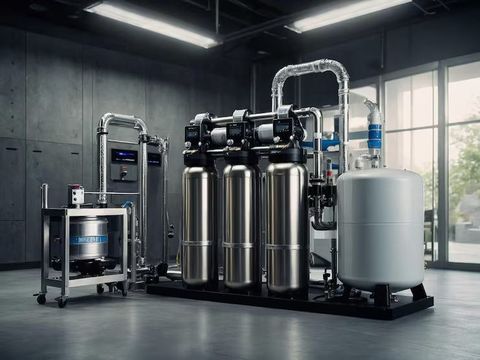
Modern membrane separation technologies combine specialized membranes, pressure-driven systems, pumps, vessels, monitoring instruments, and automated controls. Their configuration depends on the feed material, target separation, membrane characteristics, operating conditions, and required product quality.
Context
What Is Membrane Separation Equipment?
Membrane separation equipment is a collection of systems designed to separate substances using a semi-permeable membrane. Unlike conventional separation methods that may rely primarily on evaporation, distillation, sedimentation, or chemical reactions, membrane processes use differences in permeability, molecular size, charge, or chemical affinity.
A membrane generally allows selected components to pass through while retaining others. The resulting streams are commonly described as permeate and retentate, although terminology varies by process.
How Membrane Separation Works
A membrane separation system typically receives a feed stream and directs it across or through a membrane module. A driving force, such as pressure difference or concentration difference, causes certain components to pass through the membrane.
The separated streams are then collected and may undergo additional treatment.
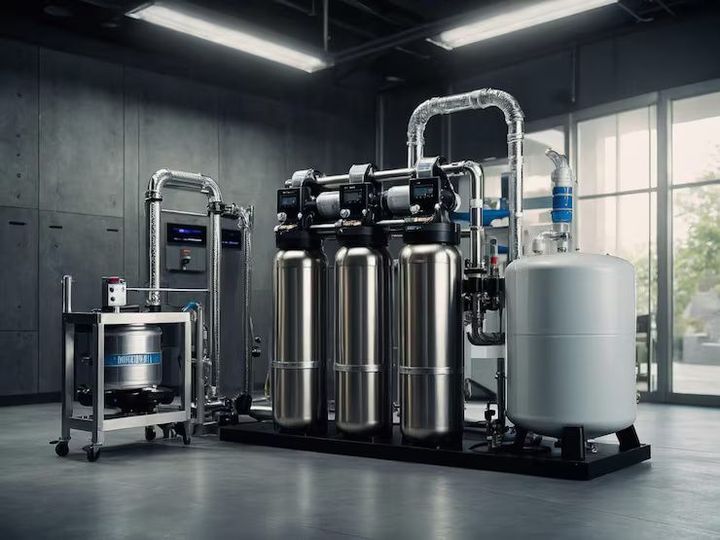
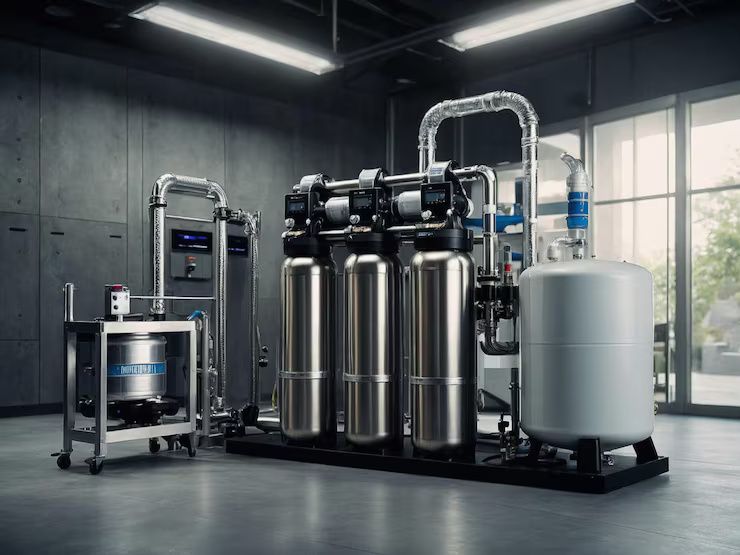
A typical system contains:
- Feed pumps or compressors
- Pretreatment equipment
- Membrane modules
- Pressure vessels or housings
- Valves and piping
- Sensors and transmitters
- Control systems
- Cleaning systems
- Permeate and retentate collection systems
Major Membrane Separation Technologies
Different membrane technologies are selected according to the material being processed and the required separation.
| Technology | Separation Principle | Typical Applications |
|---|---|---|
| Microfiltration | Particle and microorganism retention | Water and food processing |
| Ultrafiltration | Macromolecule and colloid separation | Dairy and biotechnology |
| Nanofiltration | Selective molecular and ion separation | Water treatment |
| Reverse Osmosis | Pressure-driven solvent separation | Desalination |
| Gas Separation | Selective gas permeation | Industrial gas processing |
| Pervaporation | Membrane-assisted vapor separation | Solvent dehydration |
| Electrodialysis | Ion transport through membranes | Water and chemical processing |
Each technology has different membrane structures, pressure requirements, feed limitations, and cleaning considerations.
Membrane Materials
Membrane materials influence selectivity, permeability, chemical resistance, mechanical stability, and operating life.
Common categories include:
Polymeric membranes: These are widely used in liquid and gas separation systems and can be engineered for specific permeability characteristics.
Ceramic membranes: Ceramic materials can provide resistance to elevated temperatures and certain chemically demanding environments.
Composite membranes: These combine different material layers to achieve particular separation characteristics.
Specialized membranes: Advanced applications may use membranes based on highly selective materials designed for specific gases, molecules, or ions.
Membrane Module Designs
Membrane modules provide the physical structure in which membrane elements operate.
Common configurations include:
- Spiral-wound modules
- Hollow-fiber modules
- Tubular modules
- Plate-and-frame modules
- Ceramic tubular modules
The appropriate configuration depends on feed characteristics, solids concentration, pressure requirements, cleaning procedures, and available installation space.
Importance
Why Membrane Separation Systems Matter
Membrane separation can provide continuous processing with relatively compact equipment. Because separation takes place through selective membrane transport, some applications can operate without a phase-change step.
This can make membrane technology useful in processes where thermal treatment is undesirable or where selective removal of specific components is required.
Water and Wastewater Applications
Membrane separation equipment is extensively used in water treatment.
Microfiltration and ultrafiltration can remove suspended solids, colloids, and microorganisms, while nanofiltration and reverse osmosis can provide progressively finer separation.
Applications include:
- Drinking-water treatment
- Industrial process water
- Wastewater reuse
- Desalination
- Boiler feedwater preparation
- High-purity water production
Pretreatment is particularly important because suspended solids, oils, biological growth, and scaling compounds can affect membrane performance.
Food and Beverage Processing
Membrane systems are used in dairy processing, beverage clarification, concentration, protein processing, and ingredient recovery.
Ultrafiltration can separate proteins and other macromolecules, while reverse osmosis can concentrate certain liquid streams without the same thermal exposure associated with evaporation.
Pharmaceutical and Biotechnology Applications
Membrane technologies are used in pharmaceutical and biotechnology processes for filtration, concentration, buffer exchange, clarification, and purification.
Sterile filtration can also be incorporated into controlled manufacturing environments where microbial retention is required.
Chemical and Industrial Processing
Chemical plants can use membrane systems for solvent recovery, concentration, wastewater treatment, gas separation, and selective removal of components.
Membrane systems may be integrated with distillation, adsorption, absorption, crystallization, or other separation processes to create hybrid process configurations.
Global Manufacturers and Suppliers
The global membrane separation equipment sector includes companies that manufacture membrane materials, modules, pressure vessels, pumps, controls, complete treatment systems, and integrated process equipment.
Suppliers may specialize in particular technologies such as reverse osmosis, ultrafiltration, gas separation, ceramic membranes, or electrodialysis.
When evaluating equipment, organizations generally examine membrane chemistry, module configuration, throughput requirements, pressure range, chemical compatibility, cleaning requirements, instrumentation, automation, documentation, and lifecycle considerations.
Recent Updates
Advanced Membrane Materials
Research and industrial development continue to explore membranes with improved selectivity, permeability, chemical resistance, and mechanical stability.
Material development includes polymeric composites, ceramic structures, thin-film membranes, and specialized materials designed for difficult separations.
Digital Monitoring
Modern membrane systems increasingly use sensors and digital control platforms to monitor:
- Feed pressure
- Permeate pressure
- Flow rate
- Temperature
- Conductivity
- Differential pressure
- Recovery
- Membrane performance
Continuous monitoring can help operators identify changes in operating conditions and schedule maintenance activities based on process information.
Automation
Automated membrane separation systems can regulate pumps, valves, pressure conditions, cleaning cycles, and system sequencing.
Programmable logic controllers and supervisory interfaces can provide centralized monitoring and control. Automated alarms can also notify operators when predefined process conditions are reached.
Membrane Fouling Management
Membrane fouling remains an important operational consideration. Deposits can accumulate on membrane surfaces and reduce flux or alter separation performance.
Modern systems therefore incorporate pretreatment, controlled operating conditions, cleaning procedures, and monitoring strategies designed to manage fouling.
Energy Considerations
Energy consumption is an important design factor, particularly for pressure-driven systems such as reverse osmosis and gas separation.
Equipment designers can evaluate pump efficiency, operating pressure, recovery rate, membrane characteristics, energy recovery, and system configuration when developing an installation.
Laws or Policies
Water and Environmental Requirements
Membrane separation systems used in water and wastewater applications may need to comply with local environmental requirements governing water quality, discharge, waste handling, and system operation.
Requirements vary by jurisdiction and application, so facility operators should identify the regulations applicable to their specific installation.
Food Processing Requirements
Membrane equipment used in food production may need to meet applicable hygiene, material-contact, sanitation, and process requirements.
Equipment construction, cleaning procedures, membrane materials, seals, and process conditions can all be relevant to compliance.
Pharmaceutical Manufacturing
Pharmaceutical membrane systems may operate within controlled manufacturing environments and quality-management frameworks.
Documentation, validation, cleaning procedures, material compatibility, process controls, and traceability can be important depending on the application.
Worker and Equipment Safety
Industrial membrane installations can involve elevated pressure, chemicals, electrical equipment, rotating machinery, and automated systems.
Facilities should establish appropriate procedures for pressure management, chemical handling, maintenance, isolation, and emergency response.
Tools and Resources
Process Design Software
Engineering teams can use process modeling and equipment-sizing tools to evaluate feed composition, membrane area, pressure requirements, recovery, permeate quality, and system configuration.
Pilot testing is often useful when feed characteristics are variable or when membrane performance cannot be reliably established from theoretical calculations alone.
Membrane Testing
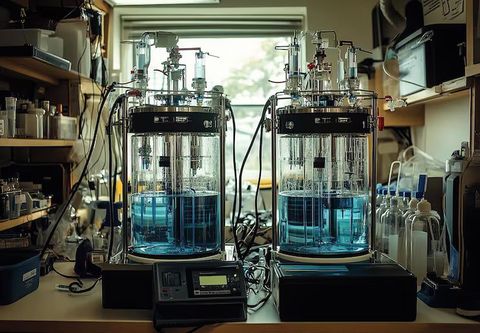
Laboratory and pilot systems can evaluate:
- Permeate flux
- Rejection
- Selectivity
- Recovery
- Fouling behavior
- Chemical compatibility
- Cleaning response
These measurements can help determine whether a particular membrane technology is appropriate for an industrial process.
Monitoring and Control Systems
Industrial control systems can collect data from pressure, flow, conductivity, temperature, and other process sensors.
Historical data can then be analyzed to identify performance changes and operational patterns.
Cleaning Systems
Membrane cleaning systems can use controlled chemical or physical procedures depending on membrane material and contaminant type.
Cleaning frequency and chemistry should be established according to membrane specifications, process conditions, and validated operating procedures where applicable.
FAQs
What is membrane separation equipment?
Membrane separation equipment uses selective membrane materials and supporting components to separate gases, liquids, dissolved substances, particles, or molecules.
What are the main types of membrane separation?
Major types include microfiltration, ultrafiltration, nanofiltration, reverse osmosis, gas separation, pervaporation, and electrodialysis.
Where is membrane separation technology used?
It is used in water treatment, desalination, food processing, pharmaceuticals, biotechnology, chemical processing, industrial wastewater treatment, and gas processing.
What is membrane fouling?
Membrane fouling occurs when unwanted materials accumulate on or within a membrane, potentially reducing permeability or changing separation performance.
How do manufacturers design membrane systems?
Manufacturers typically consider feed composition, required separation, flow rate, operating pressure, temperature, membrane material, module configuration, pretreatment, cleaning requirements, instrumentation, and automation.
Can membrane separation systems be automated?
Yes. Industrial membrane systems can incorporate automated pumps, valves, sensors, programmable controllers, alarms, cleaning sequences, and centralized monitoring interfaces.
Conclusion
Membrane separation equipment provides a flexible approach to separating components in liquid and gas streams. Technologies such as microfiltration, ultrafiltration, nanofiltration, reverse osmosis, gas separation, and electrodialysis address different separation requirements.
Manufacturing systems can combine membrane modules with pumps, pressure vessels, sensors, control systems, pretreatment, and cleaning equipment. Their applications extend across water treatment, food processing, pharmaceuticals, biotechnology, chemical manufacturing, and industrial gas processing.
As membrane materials, automation, monitoring, and process integration continue to develop, system design increasingly focuses on selective separation, operational reliability, fouling management, energy use, and compatibility with specific industrial processes.