Industrial Valves Explained: Valve Types, Flow Control Technologies, Global Manufacturers, Suppliers and Industrial Applications
Industrial valves are mechanical devices used to control the movement of liquids, gases, steam and slurries through pipelines and processing equipment. They perform essential functions such as starting or stopping flow, regulating pressure, controlling flow rates and preventing reverse movement.
Industrial valves are found in manufacturing plants, oil and gas pipelines, water treatment facilities, chemical processing units, power stations and pharmaceutical production systems. Their design depends on operating pressure, temperature, fluid characteristics, pipeline dimensions and the required level of flow control.
Context
What Are Industrial Valves?
An industrial valve consists of a pressure-containing body, an internal closing or regulating element, a stem or operating mechanism, and sealing components. Depending on its design, the valve may be operated manually or through pneumatic, electric or hydraulic actuation.
Some valves are designed primarily for isolation, while others regulate flow continuously or respond automatically to changing pressure conditions. Correct valve selection helps maintain process stability, protect equipment and reduce the likelihood of leakage or unplanned shutdowns.
Major Types of Industrial Valves
Industrial valves are classified according to their internal mechanisms and intended functions.
1. Gate Valves
Gate valves use a movable gate to open or block the flow passage. They are commonly installed in pipelines carrying water, oil, gas and steam. These valves generally operate in fully open or fully closed positions rather than regulating flow continuously.
2. Globe Valves
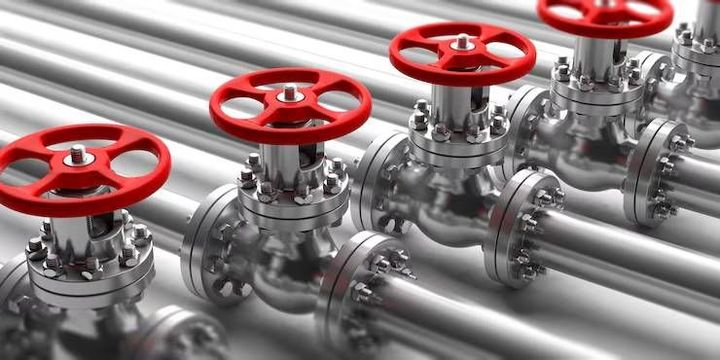
Globe valves use a movable disc and seat to regulate fluid flow. Their internal geometry supports flow adjustment, making them useful in steam systems, cooling circuits and industrial process lines where flow control is required.
3. Ball Valves
Ball valves contain a rotating ball with a passage through its centre. A quarter-turn movement opens or closes the valve. They are widely used in industrial pipelines because of their straightforward operation and effective shutoff capabilities.
4. Butterfly Valves
Butterfly valves use a rotating disc positioned inside the flow passage. Their compact construction makes them suitable for large-diameter pipelines, water distribution networks, ventilation systems and industrial cooling circuits.
5. Check Valves
Check valves allow flow in one direction and restrict reverse flow. Common designs include swing, lift, dual-plate and spring-loaded check valves. They are frequently installed near pumps and compressors to help prevent reverse movement of process fluids.
6. Plug Valves
Plug valves use a cylindrical or tapered plug with a flow opening. Rotating the plug changes the flow path. These valves are used in chemical plants, industrial processing systems and selected pipeline applications.
7. Diaphragm Valves
Diaphragm valves use a flexible membrane to separate the operating mechanism from the process fluid. They are useful in applications requiring controlled flow, reduced contamination risk or compatibility with corrosive media.
8. Needle Valves
Needle valves use a slender, tapered stem to make fine adjustments to flow. They are commonly used in instrumentation lines, sampling arrangements and pressure measurement systems.
9. Pressure Relief and Safety Valves
Pressure relief valves open when pressure reaches a defined threshold, helping protect equipment from excessive pressure. Safety valves are commonly associated with steam, gas and other compressible-fluid applications. Selection and sizing must follow the relevant engineering requirements.
Valve Technologies and Operating Mechanisms
Industrial valves use different technologies to achieve isolation, regulation and automated control.
Manual operation: Handwheels, levers and gear operators allow personnel to position valves directly.
Pneumatic actuation: Compressed air operates the valve actuator, making this approach useful in automated process plants.
Electric actuation: Electric motors position valves according to local controls or signals from automation systems.
Hydraulic actuation: Pressurised hydraulic fluid produces the force required to operate valves in demanding applications.
Control valve technology: Positioners and control signals adjust valve openings to maintain variables such as pressure, temperature or flow.
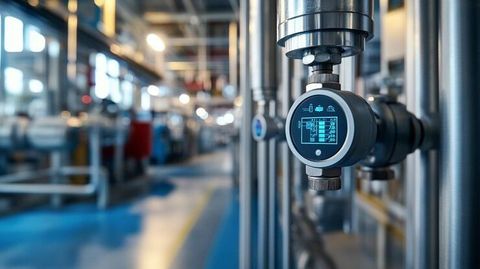
Smart valve monitoring: Digital position feedback, diagnostic sensors and network connections can help operators identify abnormal conditions and monitor valve performance.
Comparison of Industrial Valve Types
| Valve type | Main function | Typical applications |
|---|---|---|
| Gate valve | Pipeline isolation | Water, oil and steam lines |
| Globe valve | Flow regulation | Steam and process control |
| Ball valve | Rapid shutoff | Gas, liquid and chemical lines |
| Butterfly valve | Isolation and regulation | Water networks and cooling systems |
| Check valve | Reverse-flow prevention | Pump discharge and process lines |
| Plug valve | Flow isolation or diversion | Chemical and pipeline systems |
| Diaphragm valve | Flow control and fluid separation | Pharmaceutical and chemical plants |
| Needle valve | Fine flow adjustment | Instrumentation and sampling |
| Pressure relief valve | Overpressure protection | Boilers, pressure vessels and piping |
Importance of Industrial Valves
Industrial valves influence the safety, efficiency and stability of fluid-handling systems. Their importance extends beyond simply opening and closing a pipeline.
Process control: Control valves help maintain operating parameters within defined limits by adjusting the flow of process fluids.
Equipment protection: Check valves help reduce reverse-flow risks, while pressure relief devices protect systems against excessive pressure when correctly designed and installed.
Leakage management: Appropriate body materials, seat designs, stem packing and sealing arrangements help limit fluid leakage.
Energy management: Selecting valves with suitable flow characteristics can reduce unnecessary pressure losses and help maintain efficient pumping or circulation.
Operational continuity: Suitable valve designs, correct installation and planned inspection can reduce equipment interruptions and support consistent plant operation.
Industrial Valve Manufacturing Processes
Valve manufacturing combines metalworking, component production, assembly and inspection. The exact sequence depends on the valve design, materials, dimensions and operating requirements.
1. Engineering Design and Specification
Engineers determine the valve type, nominal size, pressure class, temperature range, end connections and operating mechanism. Computer-aided design software supports dimensional development, while engineering calculations help evaluate pressure containment and mechanical stresses.
The design specification also identifies the required body, trim, seat and sealing materials.
2. Raw Material Selection
Common materials include carbon steel, stainless steel, cast iron, ductile iron, bronze and specialised corrosion-resistant alloys. Material selection depends on the fluid's chemical properties, operating temperature, pressure and potential abrasion.
Material certificates and inspection records help confirm that supplied metal conforms to the specified grade.
3. Casting and Forging
Cast valve bodies are produced by pouring molten metal into prepared moulds. Forged components are shaped under compressive force to achieve the required geometry and mechanical characteristics.
The selected process depends on the valve design, component dimensions, material and applicable engineering requirements.
4. Machining and Surface Preparation
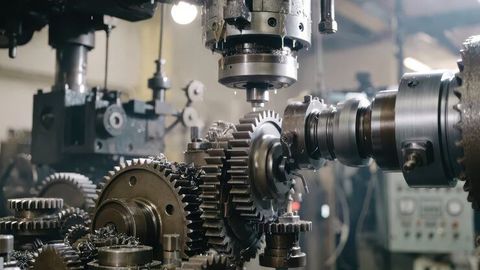
Computer numerical control (CNC) machines, drilling equipment, milling machines and precision lathes create the required dimensions and mating surfaces.
Machining accuracy is particularly important for valve seats, stems, disc assemblies, ball surfaces and sealing interfaces. Surface finishing helps achieve the contact characteristics required for proper operation.
5. Component Assembly
Manufactured components are assembled with the necessary seats, seals, packing, fasteners and operating mechanisms. Assembly procedures must account for alignment, clearances, torque requirements and material compatibility.
For automated valves, actuators, positioners and feedback devices may be installed and configured during this stage.
6. Inspection and Pressure Testing
Quality inspection may include dimensional verification, visual examination, material identification and non-destructive testing where required.
Pressure testing evaluates the integrity of the valve body and the performance of its closing surfaces. Hydrostatic tests use liquid, while pneumatic tests use gas under controlled procedures. The applicable standard determines the test method, pressure, duration and acceptance criteria.
7. Final Documentation and Packaging
Completed valves may be marked with identification details, pressure ratings, material information and manufacturer references. Technical documentation can include inspection records, pressure test certificates and material test reports, according to the project specification.
Protective packaging helps prevent damage to machined surfaces and sealing components during storage and transportation.
Global Industrial Valve Manufacturers and Suppliers
The industrial valve sector includes companies specialising in general-purpose valves, automated control valves, pipeline equipment and demanding process applications. The following organisations have established industrial valve product portfolios.
Emerson: Develops industrial automation technologies, including Fisher control valves and associated control equipment used in process industries.
Flowserve: Manufactures flow-control equipment, including industrial valves for power generation, chemical processing, oil and gas, and other process applications.
SLB: Provides Cameron-branded valve and flow-control technologies for selected oil, gas and pipeline applications.
Baker Hughes: Has industrial flow-control technologies, including Masoneilan control valves used in process applications.
KSB: Produces pumps and industrial valves used in water management, building technology, energy and industrial systems.
KITZ Corporation: Manufactures industrial valves in several categories, including ball, gate, globe and butterfly valves.
Bray International: Develops butterfly valves, ball valves, actuators and related flow-control products for industrial applications.
AVK Group: Manufactures valves and related equipment used in water supply, wastewater, gas distribution and infrastructure networks.
Velan: Produces industrial valves for power generation, nuclear applications, chemical processing and other demanding operating environments.
SAMSON: Specialises in control valves, actuators and automation equipment for process industries.
Product specifications differ by model and configuration. Engineers should verify pressure-temperature ratings, materials, approvals and dimensional compatibility against the requirements of each installation.
Industrial Applications of Valves
Oil and Gas
Valves control the movement of crude oil, natural gas, refined products and process fluids across production facilities, pipelines, terminals and refineries. Ball, gate, check and specialised control valves are selected according to pressure, fluid composition and operating conditions.
Chemical and Petrochemical Processing
Chemical plants use valves to manage acids, solvents, reactive fluids, gases and intermediate products. Corrosion resistance, sealing compatibility and temperature limits are important considerations when selecting equipment for these applications.
Water and Wastewater Treatment
Water treatment plants use gate, butterfly, check and control valves throughout intake, filtration, pumping, treatment and distribution systems. Wastewater facilities may also use knife gate valves for selected slurry and solids-handling applications.
Power Generation
Power stations use valves in steam systems, cooling circuits, boiler feedwater lines and fuel handling arrangements. High-temperature and high-pressure applications require suitable materials, pressure ratings and inspection procedures.
Food and Beverage Manufacturing
Food processing facilities use valves to control water, ingredients, cleaning fluids and finished products. Hygienic designs may feature smooth internal surfaces, cleanable flow paths and materials compatible with the process.
Pharmaceutical and Biotechnology Production
Pharmaceutical plants require carefully selected valves for purified water, process fluids, gases and cleaning systems. Hygienic construction, documentation, cleanability and contamination control are important design considerations.
Mining and Mineral Processing
Mining operations use valves in slurry transport, dewatering, flotation circuits, tailings systems and chemical dosing arrangements. Abrasion-resistant materials and suitable passage geometry are important when handling solids-laden fluids.
HVAC and Industrial Cooling
Heating, ventilation and air-conditioning systems use valves to regulate chilled water, hot water and cooling circuits. Butterfly, balancing, globe and control valves help maintain appropriate flow distribution across connected equipment.
Recent Developments in Industrial Valve Technology
Industrial valve design continues to evolve through improvements in automation, materials, diagnostics and environmental performance.
Digital monitoring: Smart positioners and connected sensors can provide information about valve position, actuator behaviour and operating conditions. This data may help maintenance teams identify developing faults.
Predictive maintenance: Condition-monitoring systems can analyse operating data to identify patterns associated with friction, actuator wear, abnormal cycling or leakage.
Advanced sealing materials: Developments in polymer seats, metal seals and packing materials support applications involving demanding temperatures, pressures and chemical environments.
Low-emission designs: Improved stem sealing and specialised emission-testing methods help address fugitive emissions from valves used in industrial processes.
Automated plant integration: Electric and pneumatic actuators increasingly connect with distributed control systems, programmable logic controllers and industrial communication networks.
These technologies do not eliminate the need for physical inspection. Their effectiveness depends on suitable configuration, operating conditions, maintenance procedures and the quality of monitoring data.
Laws, Policies and Industrial Standards
Industrial valve design, production, installation and testing may be governed by national regulations, industry standards and project-specific specifications.
Important standards include:
ASME B16.34: Addresses design requirements and pressure-temperature ratings for specified flanged, threaded and welding-end valves.
API 6D: Covers pipeline and piping valves used in relevant pipeline applications.
API 600: Addresses specified steel gate valve designs.
API 608: Covers metal ball valves within its defined scope.
API 609: Addresses butterfly valve designs covered by the standard.
API 598: Establishes inspection and testing requirements for valves within its scope.
ISO 5208: Specifies pressure testing methods and acceptance criteria for industrial valves.
ISO 15848: Addresses measurement, testing and qualification of fugitive emissions from valve stem and body connections within its scope.
The applicable requirements depend on the valve category, industry, installation location and project specification. Standards are not interchangeable in every situation, so engineers should verify the current edition and the specific scope before finalising a design. <Cite refs={["turn665190search0","turn665190search7"]}/>
Tools and Resources for Industrial Valve Selection
Engineers, maintenance teams and plant designers can use several resources to identify suitable valve configurations.
Valve sizing software: Helps evaluate flow capacity, pressure drop and control-valve sizing parameters.
Pressure-temperature tables: Support the verification of allowable operating conditions for specified materials and pressure classes.
Piping and instrumentation diagrams (P&IDs): Show valve locations, process connections and control arrangements.
Material compatibility charts: Help assess whether body, trim and sealing materials are suitable for the process fluid.
Manufacturer technical catalogues: Provide dimensions, operating limits, connection details, actuator data and applicable approvals.
Inspection and maintenance records: Document leakage observations, operating history, test results and component replacements.
Standards documentation: Establishes requirements for design, testing, dimensions, emissions and installation.
A complete valve specification normally identifies the fluid, flow requirement, pressure, temperature, pipe size, end connection, body and trim materials, operating method and required testing documentation.
FAQs About Industrial Valves
1. What are industrial valves used for?
Industrial valves control, regulate, isolate or redirect the movement of liquids, gases, steam and slurries in pipelines and process equipment. Some designs also prevent reverse flow or protect systems from excessive pressure.
2. Which industrial valve types are commonly used?
Common types include gate, globe, ball, butterfly, check, plug, diaphragm and needle valves. Pressure relief valves and automated control valves are also widely used in specialised applications.
3. Which materials are used to manufacture industrial valves?
Common materials include carbon steel, stainless steel, cast iron, ductile iron, bronze and specialised alloys. Seats and seals may use polymers, elastomers or metal surfaces, depending on fluid compatibility and operating conditions.
4. How are industrial valves tested?
Testing can include visual inspection, dimensional checks, material verification, pressure testing and seat leakage testing. Additional examination or emission testing may be required by the applicable standard or project specification.
5. How should an industrial valve be selected?
Selection begins with the required function and the characteristics of the process fluid. Engineers then evaluate pressure, temperature, flow rate, materials, leakage requirements, end connections, actuation and applicable standards.
Conclusion
Industrial valves are essential components in fluid-handling systems across manufacturing, energy, water management, chemical processing and other industries. Their performance depends on suitable design, material selection, manufacturing accuracy, assembly quality and testing.
Understanding the differences between valve types helps engineers match each design to its intended function. As automation and digital monitoring continue to develop, industrial valves are becoming increasingly integrated with process-control and maintenance systems. Proper specification, installation and inspection remain central to safe and consistent operati