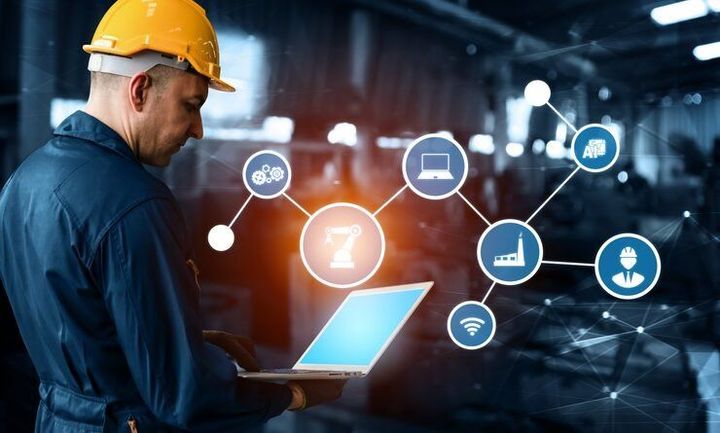
Connected Worker Platforms Explained: Digital Workforce Technologies, Worker Connectivity, Industrial IoT, Digital Work Instructions, Safety Systems, Global Providers and Industrial Applications
Connected worker platforms are digital systems that connect frontline employees with operational information, industrial equipment, workflows, communication tools, training resources, and enterprise systems. Connected worker platforms are increasingly used in manufacturing, energy, logistics, utilities, field operations, and other industrial environments.
These platforms combine mobile applications, industrial IoT connectivity, digital work instructions, workforce communication, safety functions, task management, and operational data. The objective is to make relevant information accessible to workers at the point of activity while connecting frontline operations with broader digital systems.
What Are Connected Worker Platforms?
A connected worker platform is a software environment designed to support frontline workers by providing digital information, workflows, instructions, communication, and operational tools through connected devices.
Depending on the platform, workers may access information through:
Smartphones
Tablets
Industrial handheld terminals
Wearable devices
Smart glasses
Industrial computers
Voice-enabled devices
Connected machinery interfaces
A connected worker platform can integrate with systems such as:
Manufacturing execution systems
Enterprise resource planning systems
Computerized maintenance management systems
Industrial IoT platforms
Warehouse management systems
Quality management systems
Safety management systems
Why Connected Worker Platforms Matter
Industrial workers frequently operate across production floors, warehouses, maintenance areas, field locations, and other environments where access to centralized information can be difficult.
Connected worker technologies can help organizations provide workers with:
Digital procedures
Equipment information
Work instructions
Maintenance tasks
Safety information
Training materials
Inspection forms
Production information
Task notifications
Communication tools
The platform can also capture information from workers and transfer it back to operational systems.
Major Components of Connected Worker Platforms
Connected worker ecosystems typically combine several technologies.
Mobile Workforce Applications
Mobile applications allow workers to access workflows, instructions, checklists, forms, alerts, and operational information from connected devices.
Digital Work Instructions
Digital work instructions provide step-by-step guidance for manufacturing, maintenance, inspection, assembly, and other activities.
They may include:
Text instructions
Images
Diagrams
Videos
Equipment specifications
Checklists
Warning messages
Verification steps
Industrial IoT Connectivity
Industrial IoT connects workers with machines, sensors, equipment, and production systems.
Data from connected assets can provide contextual information about machine status, operating conditions, or maintenance requirements.
Worker Communication
Connected worker platforms can support communication between frontline employees, supervisors, engineers, maintenance teams, and operations managers.
Communication features may include:
Messaging
Notifications
Alerts
Team communication
Shift information
Escalation workflows
Task Management
Task-management functions organize operational activities and track completion.
Typical tasks include:
Inspections
Maintenance activities
Quality checks
Safety checks
Production activities
Equipment verification
Inventory tasks
Digital Work Instructions
Digital work instructions are one of the most common components of connected worker technologies.
Traditional paper-based procedures can be converted into interactive digital workflows.
A digital instruction may guide a worker through:
Selecting the assigned task
Identifying the equipment
Reviewing safety information
Completing each process step
Recording measurements
Confirming required conditions
Uploading photographs or evidence
Completing the task
Digital instructions can also provide different procedures depending on equipment configuration or operating conditions.
Connected Worker and Industrial IoT
Industrial IoT provides the connectivity layer between physical assets and digital systems.
A typical architecture can follow:
Sensors → Industrial Network → Edge/IoT Platform → Connected Worker Platform → Worker
For example, a machine sensor can identify an abnormal temperature condition. The connected system can generate a maintenance notification and provide the assigned technician with equipment information and a digital troubleshooting procedure.
Worker Safety Systems
Connected worker platforms can support safety processes by providing workers with relevant information at the point of activity.
Safety functions may include:
Digital safety checklists
Hazard notifications
Permit workflows
Lockout/tagout procedures
Incident reporting
Safety inspections
Emergency notifications
Personal protective equipment guidance
Some systems can connect safety workflows with equipment and location data.
Connected Worker Training
Digital training functions allow workers to access instructional material during onboarding and ongoing operations.
Training content may include:
Equipment training
Standard operating procedures
Safety training
Maintenance procedures
Quality requirements
Compliance documentation
Skills assessments
Platforms can track training assignments and completion status.
Wearable Technology
Wearables can extend connected worker functionality beyond conventional smartphones and tablets.
Examples include:
Smart glasses
Industrial headsets
Smart watches
Wearable scanners
Body-worn sensors
Connected safety devices
Augmented-reality systems can provide visual instructions while workers perform physical tasks.
Connected Worker and Augmented Reality
Augmented reality can overlay digital information onto the worker's physical environment.
For example, a maintenance technician using smart glasses may view:
Equipment identification
Component locations
Assembly instructions
Maintenance procedures
Technical diagrams
Inspection requirements
AR applications can also support remote assistance, allowing specialists to provide guidance to field workers.
Manufacturing Applications
Connected worker platforms have applications throughout manufacturing.
Production Operations
Workers can access digital production instructions, process parameters, quality requirements, and task assignments.
Maintenance
Maintenance teams can receive work orders, equipment histories, troubleshooting instructions, and inspection checklists.
Quality Control
Quality teams can use digital inspection forms, measurement records, photographs, and defect reporting workflows.
Assembly
Assembly workers can receive step-by-step instructions and verification requirements for specific products or configurations.
Warehouse Operations
Warehouse workers can access picking instructions, inventory information, scanning workflows, and task assignments.
Energy and Utilities Applications
Energy and utility organizations use connected worker technologies to support field operations.
Applications include:
Asset inspections
Equipment maintenance
Field service
Safety procedures
Remote assistance
Digital reporting
Work-order management
Workers can access asset information while operating at remote or distributed facilities.
Oil and Gas Applications
Connected worker platforms can support inspection, maintenance, field operations, and safety workflows in oil and gas environments.
Digital systems can provide:
Equipment documentation
Inspection procedures
Maintenance instructions
Safety information
Work permits
Field reporting
Logistics and Warehousing
Connected worker systems can help coordinate frontline warehouse activities.
Typical applications include:
Picking
Packing
Sorting
Inventory checks
Equipment inspections
Shipment verification
Warehouse safety
Connected Worker Platform Architecture
A connected worker environment can contain several layers.
| Layer | Function |
|---|---|
| Worker Device | Provides user access |
| Application | Delivers workflows and instructions |
| Connectivity | Transfers information |
| IoT Platform | Connects industrial assets |
| Integration Layer | Connects enterprise systems |
| Analytics | Processes operational data |
| Enterprise Systems | Stores business and operational information |
Integration With Enterprise Systems
Connected worker platforms become more useful when they exchange information with existing enterprise and industrial systems.
Common integrations include:
ERP
MES
CMMS
WMS
QMS
EAM
SCADA
Industrial IoT platforms
For example, a maintenance work order generated in a CMMS can be delivered to a technician through a connected worker application. After completion, inspection results and task records can be returned to the maintenance system.
Manufacturing and Deployment Process
Implementing a connected worker platform generally involves several stages.
1. Identify Operational Requirements
Organizations first identify the workforce activities that require digital support.
2. Map Existing Workflows
Current production, maintenance, inspection, safety, and training workflows are documented.
3. Select Digital Use Cases
Potential use cases are evaluated based on operational requirements and expected integration needs.
4. Configure the Platform
Workflows, user roles, instructions, forms, notifications, and dashboards are configured.
5. Integrate Industrial Systems
The platform is connected with relevant enterprise, automation, and IoT systems.
6. Deploy Worker Devices
Organizations select and configure smartphones, tablets, scanners, wearables, or industrial terminals.
7. Train Workers
Workers are introduced to the platform, workflows, devices, and relevant procedures.
8. Monitor Platform Performance
Usage, workflow completion, data quality, system availability, and operational feedback are monitored.
Data and Analytics
Connected worker platforms generate operational information from frontline activities.
Data may include:
Task completion
Inspection results
Equipment observations
Worker confirmations
Quality records
Maintenance findings
Safety observations
Training completion
Workflow duration
Analytics systems can use this information to identify recurring issues and operational patterns.
Cybersecurity Considerations
Connected worker systems operate across mobile devices, industrial networks, cloud platforms, and enterprise applications.
Important cybersecurity considerations include:
User authentication
Role-based access
Device security
Data encryption
Network segmentation
Secure APIs
Access logging
Software updates
Data governance
Security architecture should account for both operational technology and information technology environments.
Global Providers and Technology Categories
The connected worker technology market includes software providers, industrial automation companies, enterprise software companies, workforce technology developers, and specialized digital-work-instruction providers.
Provider categories include:
Connected worker platform providers
Digital work instruction software companies
Industrial IoT providers
Manufacturing software companies
Workforce management technology providers
Enterprise software providers
Augmented reality technology companies
Industrial automation companies
Mobile workforce software providers
Safety technology providers
Organizations evaluating providers commonly examine platform functionality, integration capabilities, device compatibility, offline functionality, security, analytics, scalability, and deployment requirements.
Factors to Consider When Selecting a Connected Worker Platform
Important considerations include:
Workforce size
Number of facilities
Worker device types
Digital work instruction requirements
Offline operation
Industrial IoT integration
ERP/MES/CMMS integration
Security architecture
User management
Workflow flexibility
Analytics capabilities
Multilingual support
Training requirements
Scalability
Data governance
Practical Connected Worker Platform Selection Workflow
1. Identify the Worker Groups
Determine which employees will use the platform, such as production operators, maintenance technicians, quality teams, warehouse workers, or field technicians.
2. Map Current Workflows
Document existing paper, spreadsheet, verbal, or software-based processes.
3. Prioritize Digital Use Cases
Identify workflows where digital instructions, task management, mobile access, or real-time information can provide operational value.
4. Define Integration Requirements
Determine which ERP, MES, CMMS, WMS, QMS, SCADA, or IoT systems must exchange data with the platform.
5. Select Worker Devices
Choose smartphones, tablets, scanners, smart glasses, wearable devices, or industrial terminals according to the work environment.
6. Evaluate Connectivity
Check Wi-Fi, cellular, private networks, industrial Ethernet, and offline requirements.
7. Review Security
Evaluate authentication, permissions, encryption, device management, audit trails, and data protection.
8. Pilot the Platform
Test selected workflows with a defined worker group before expanding across facilities.
9. Measure Operational Results
Track workflow completion, information access, data quality, training progress, and user adoption.
Connected Worker Technology Comparison
| Technology | Primary Function | Typical Application |
|---|---|---|
| Mobile apps | Worker access | Production and field work |
| Digital instructions | Step-by-step guidance | Assembly and maintenance |
| Industrial IoT | Asset connectivity | Machine monitoring |
| Wearables | Hands-free access | Field operations |
| AR | Visual guidance | Maintenance and assembly |
| Task management | Workflow coordination | Operations |
| Analytics | Data analysis | Performance monitoring |
| Safety systems | Risk workflow support | Industrial safety |
Future Trends in Connected Worker Platforms
Connected worker technologies are increasingly converging with Industrial IoT, artificial intelligence, augmented reality, edge computing, and industrial automation.
Emerging developments include:
AI-assisted work instructions
Voice-enabled industrial interfaces
Augmented-reality workflows
Real-time equipment context
Intelligent task assignment
Connected safety wearables
Edge-based worker applications
Digital twins
Predictive workflow recommendations
Advanced frontline analytics
The continued integration of workers, machines, software, and industrial data is creating more connected operational environments.
Frequently Asked Questions
What is a connected worker platform?
A connected worker platform is a digital system that provides frontline employees with workflows, instructions, communication, operational information, and connections to industrial and enterprise systems.
What are digital work instructions?
Digital work instructions provide step-by-step procedures through digital devices such as tablets, smartphones, industrial terminals, or smart glasses.
How do connected worker platforms use Industrial IoT?
Industrial IoT provides data from machines, sensors, and equipment that can be presented to workers as operational context, alerts, or maintenance information.
Are connected worker platforms used only in manufacturing?
No. They are also used in energy, utilities, logistics, warehousing, field operations, oil and gas, transportation, and other industrial environments.
Can connected worker platforms integrate with enterprise software?
Yes. Platforms can integrate with systems such as ERP, MES, CMMS, WMS, QMS, EAM, SCADA, and Industrial IoT platforms.
Conclusion
Connected worker platforms connect frontline employees with digital instructions, industrial equipment, operational workflows, safety systems, training resources, and enterprise applications. They provide a digital layer between workers and the broader industrial technology environment.
By combining mobile applications, Industrial IoT, digital work instructions, task management, analytics, wearables, and enterprise integration, these platforms can support production, maintenance, quality, safety, training, and field operations. As industrial organizations adopt more connected technologies, the connected worker is becoming an important part of digitally integrated operations.