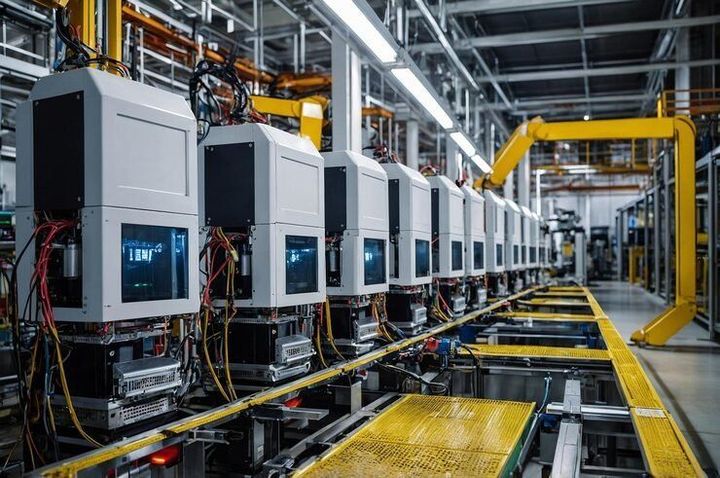
Industrial UPS Systems Explained: UPS Types, Power Backup Technologies, Battery Systems, Manufacturing Processes, Global Manufacturers, Suppliers and Industrial Applications
Industrial UPS systems provide backup and conditioned electrical power to critical equipment when the primary power supply experiences interruptions, voltage disturbances, or other electrical abnormalities.
Industrial UPS systems are widely used in manufacturing plants, process industries, power facilities, automation systems, data infrastructure, healthcare facilities, and other environments where power continuity is important.
These systems combine power electronics, energy storage, control systems, switching equipment, monitoring technologies, and protective functions. Depending on the application, an industrial UPS can support loads ranging from control electronics and PLCs to large automation systems and critical industrial equipment.
What Are Industrial UPS Systems?
An industrial uninterruptible power supply (UPS) is a power-protection system designed to maintain electrical power to connected loads during disturbances in the primary power source.
A typical UPS system includes:
Rectifier
Inverter
Battery bank
Static bypass
Control system
Input and output protection
Monitoring interface
Cooling system
Enclosure
The UPS continuously manages the electrical path between the incoming power supply, energy-storage system, and connected load.
Why Industrial UPS Systems Matter
Industrial facilities can contain equipment that is sensitive to voltage fluctuations and interruptions. Even a short power disturbance can interrupt automated processes, affect control systems, or cause equipment shutdowns.
UPS systems can help support:
PLCs
Industrial computers
Control panels
Automation systems
Instrumentation
Communication equipment
Safety systems
Data acquisition systems
Process-control equipment
Critical electrical loads
The appropriate UPS architecture depends on the criticality, electrical characteristics, and required backup duration of the connected load.
Major Types of Industrial UPS Systems
UPS technologies differ according to their electrical architecture and operating method.
Online Double-Conversion UPS
Online double-conversion UPS systems continuously convert incoming AC power to DC and then regenerate AC power through an inverter.
The architecture generally follows:
AC Input → Rectifier → DC Bus → Inverter → AC Output
This configuration can provide electrical isolation and controlled output characteristics for sensitive loads.
Line-Interactive UPS
Line-interactive systems use power-conditioning equipment and an inverter to respond to certain power disturbances.
They are generally used for applications where the power environment is less demanding than highly critical industrial processes.
Offline or Standby UPS
Standby UPS systems normally supply incoming utility power directly to the load and switch to battery operation when an interruption occurs.
They are more commonly associated with less demanding applications.
Modular UPS Systems
Modular UPS systems use multiple power modules that can be added or configured according to required capacity and redundancy.
Potential advantages include:
Scalability
Module-level maintenance
Redundancy
Flexible capacity
Three-Phase Industrial UPS
Three-phase UPS systems are designed for industrial electrical systems with three-phase loads.
They can support:
Industrial automation
Process equipment
Large control systems
Manufacturing infrastructure
Critical electrical distribution
Industrial UPS Power Backup Technologies
UPS systems use several technologies to maintain power continuity.
Double-Conversion Technology
Double conversion continuously processes incoming electrical power through a rectifier and inverter. This provides controlled output power while separating the load from many input power disturbances.
Static Bypass
A static bypass provides an alternate electrical path around the UPS power-conversion stage under specific operating conditions.
Automatic Transfer Functions
Automatic switching functions can transfer the load between available power paths according to system conditions.
Energy Storage
Energy storage supplies power when the primary electrical source is unavailable.
Common technologies include:
Lead-acid batteries
Lithium-ion batteries
Nickel-cadmium batteries
Flywheel systems
Industrial UPS Battery Systems
The battery system is a critical part of an industrial UPS because it determines how long the system can support connected loads during a power interruption.
Lead-Acid Batteries
Valve-regulated lead-acid batteries are widely used in many UPS installations.
Advantages can include established technology, availability, and compatibility with many UPS architectures.
Lithium-Ion Batteries
Lithium-ion batteries can provide higher energy density and may require less physical space for some applications.
Battery-management systems are important for monitoring cell and pack conditions.
Nickel-Cadmium Batteries
Nickel-cadmium batteries can be used in demanding industrial environments where temperature tolerance and long operational life are important considerations.
Flywheel Energy Storage
Flywheel systems store energy mechanically rather than chemically. They can provide short-duration ride-through power and may be combined with generators or other backup systems.
UPS Battery Monitoring
Battery monitoring systems can track parameters such as:
Voltage
Current
Temperature
State of charge
Battery health
Cell condition
Charging status
Continuous monitoring can help identify abnormal battery conditions before they affect backup performance.
Industrial UPS Components
| Component | Primary Function |
|---|---|
| Rectifier | Converts AC to DC |
| Inverter | Converts DC to AC |
| Battery | Stores electrical energy |
| Static bypass | Provides alternate power path |
| Charger | Maintains battery charge |
| Controller | Manages UPS operation |
| Transformer | Provides voltage conversion/isolation where required |
| Cooling system | Controls internal temperature |
| Monitoring system | Tracks operating conditions |
| Protection system | Protects electrical components |
Industrial UPS Manufacturing Process
Manufacturing an industrial UPS involves power electronics, mechanical fabrication, electrical assembly, battery integration, software, and testing.
1. System Engineering
Engineers define:
Power capacity
Input voltage
Output voltage
Phase configuration
Backup duration
Redundancy
Environmental conditions
Communication requirements
2. Power Electronics Design
Rectifiers, inverters, semiconductor switches, capacitors, filters, and control circuits are designed according to the required electrical characteristics.
3. Enclosure Manufacturing
Industrial UPS cabinets are fabricated using sheet metal, structural components, ventilation systems, doors, mounting systems, and protective finishes.
4. Electrical Assembly
Power modules, circuit breakers, contactors, busbars, control boards, wiring, and protection components are installed.
5. Battery Integration
Battery cabinets, battery monitoring equipment, disconnects, protection devices, and charging systems are integrated.
6. Cooling Integration
Fans, heat sinks, air channels, and other thermal-management components are incorporated to control operating temperatures.
7. Control System Integration
Microcontrollers, digital signal processors, communication interfaces, displays, sensors, and monitoring software are integrated.
8. Software Configuration
Control logic, alarms, operating parameters, communication settings, and monitoring functions are configured.
9. Electrical Testing
Testing may include:
Input/output voltage verification
Frequency testing
Load testing
Transfer testing
Battery charging verification
Protection testing
Communication testing
10. Final Inspection
The completed system is inspected for mechanical integrity, wiring, electrical performance, documentation, safety functions, and operating parameters.
Industrial UPS Automation and Monitoring
Modern UPS systems can connect with industrial automation and facility-management systems.
Communication interfaces may support:
Ethernet
Modbus
SNMP
Industrial communication networks
Digital inputs and outputs
Serial communication
Monitoring platforms can provide information about:
UPS operating status
Load percentage
Input voltage
Output voltage
Battery status
Temperature
Alarm conditions
Maintenance requirements
Industrial UPS and Power Quality
UPS systems can help address several electrical power-quality problems, depending on their architecture.
These may include:
Voltage fluctuations
Short interruptions
Electrical noise
Frequency variations
Certain transient disturbances
Complete power outages
Online double-conversion systems are particularly suited to applications requiring tightly controlled output power.
Industrial UPS Applications
Industrial UPS systems are used across multiple sectors.
Manufacturing Plants
UPS systems can support PLCs, industrial computers, automation controllers, sensors, communication equipment, and critical control systems.
Process Industries
Chemical, pharmaceutical, food-processing, and other process plants may use UPS systems to maintain critical instrumentation and control equipment.
Power Generation
Power facilities use UPS systems for control systems, protection equipment, communication systems, and critical auxiliary loads.
Oil and Gas
UPS systems can support control, monitoring, instrumentation, emergency systems, and communication equipment.
Data Centers
UPS systems provide conditioned backup power for servers, networking equipment, storage systems, and critical infrastructure.
Telecommunications
UPS systems can support network infrastructure, communication equipment, and remote facilities.
Transportation Infrastructure
Railway, airport, traffic-management, and other transportation systems may use UPS technology for control and communication equipment.
Industrial UPS Redundancy
Critical installations may use redundant UPS architectures to improve power availability.
Common configurations include:
N+1 redundancy
Parallel UPS systems
Distributed redundant systems
Dual power paths
Modular redundant architectures
The appropriate configuration depends on load criticality, maintenance requirements, capacity, and electrical architecture.
Factors to Consider When Selecting an Industrial UPS
UPS selection requires careful analysis of the electrical load and operating environment.
Important factors include:
Load capacity
Load type
Input voltage
Output voltage
Single-phase or three-phase configuration
Required backup duration
Battery technology
Power factor
Efficiency
Redundancy
Environmental conditions
Cooling requirements
Monitoring capabilities
Communication interfaces
Maintenance requirements
Physical footprint
Practical Industrial UPS Selection Workflow
1. Define the Critical Loads
Identify which equipment requires uninterrupted power.
2. Determine the Load Capacity
Calculate the required UPS capacity based on connected electrical loads and expected operating conditions.
3. Analyze Load Characteristics
Determine whether the loads include motors, variable-frequency drives, PLCs, computers, power supplies, instrumentation, or other equipment with specific electrical characteristics.
4. Determine Backup Duration
Establish how long the UPS must maintain power during an interruption.
5. Select UPS Architecture
Compare online double-conversion, modular, three-phase, and other architectures according to application requirements.
6. Select Energy Storage
Evaluate lead-acid, lithium-ion, nickel-cadmium, flywheel, or other storage technologies.
7. Evaluate Redundancy
Determine whether N+1, parallel, or dual-path architecture is appropriate.
8. Review Environmental Conditions
Evaluate temperature, humidity, dust, altitude, vibration, and installation location.
9. Define Monitoring Requirements
Determine required communication protocols, remote monitoring, alarms, battery monitoring, and integration with automation systems.
10. Verify Testing and Documentation
Review electrical specifications, battery information, protection features, technical documentation, testing procedures, and applicable standards.
Industrial UPS Technology Comparison
| UPS Type | Main Characteristic | Typical Application |
|---|---|---|
| Online double-conversion | Continuous power conversion | Critical industrial loads |
| Line-interactive | Voltage regulation and backup | Less demanding systems |
| Standby | Battery backup during outage | Basic backup applications |
| Modular UPS | Scalable architecture | Growing facilities |
| Three-phase UPS | Three-phase load support | Industrial plants |
| Flywheel UPS | Mechanical energy storage | Short-duration backup |
Future Trends in Industrial UPS Systems
Industrial UPS technology is evolving toward higher efficiency, intelligent monitoring, modular architectures, advanced batteries, and digital power management.
Important developments include:
Lithium-ion energy storage
Modular UPS architectures
Intelligent battery monitoring
Remote diagnostics
Digital power management
Higher-efficiency power electronics
Advanced semiconductor technologies
Predictive maintenance
Integrated energy-management systems
Industrial IoT connectivity
These technologies can help facilities improve visibility into power infrastructure while supporting more flexible backup architectures.
Frequently Asked Questions
What is an industrial UPS system?
An industrial UPS system provides backup and conditioned electrical power to critical industrial loads during power interruptions and certain electrical disturbances.
What are the main types of industrial UPS systems?
Common types include online double-conversion, line-interactive, standby, modular, and three-phase UPS systems.
Which batteries are used in industrial UPS systems?
Common technologies include lead-acid, lithium-ion, and nickel-cadmium batteries. Flywheel systems provide an alternative form of energy storage.
How long can an industrial UPS provide backup power?
Backup duration depends on the connected load, UPS capacity, battery capacity, battery technology, and system configuration.
Where are industrial UPS systems used?
They are used in manufacturing, process industries, power generation, oil and gas, data centers, telecommunications, transportation infrastructure, and other critical facilities.
Conclusion
Industrial UPS systems provide an important layer of power continuity for critical industrial and infrastructure equipment. By combining rectifiers, inverters, energy storage, bypass systems, monitoring, protection, and control technologies, UPS systems can maintain electrical power during interruptions and help manage certain power-quality disturbances.
Selecting an appropriate industrial UPS requires evaluation of load capacity, electrical characteristics, backup duration, battery technology, redundancy, environmental conditions, monitoring, and integration requirements. As industrial facilities become more connected and automated, intelligent UPS monitoring, modular architectures, advanced batteries, and digital power-management technologies are becoming increasingly important.