Membrane Food Processing Explained: Filtration Technologies, Processing Systems, Manufacturers, Suppliers and Industrial Applications
Membrane food processing uses semi-permeable membranes to separate, concentrate, clarify, or purify components in food and beverage streams. Unlike conventional thermal separation methods, membrane systems can perform many processing steps under relatively mild temperature conditions, making them useful for products where heat exposure can affect quality or composition.
Modern membrane food processing systems use technologies such as microfiltration, ultrafiltration, nanofiltration, reverse osmosis, and membrane distillation. These systems are applied to dairy products, fruit juices, beverages, plant-based ingredients, fermentation products, water treatment, and other food-processing operations.
Context
What Is Membrane Food Processing?
Membrane food processing is a separation technology in which a selective membrane allows some components of a liquid or gas stream to pass through while retaining others.
The two principal streams are generally known as permeate and retentate. The permeate passes through the membrane, while the retained material remains on the feed side.
A membrane system can therefore separate components according to characteristics such as molecular size, charge, solubility, or diffusion behavior.
How Membrane Filtration Works
A typical membrane filtration process follows several stages:
- Food or beverage material enters the feed system.
- A pump creates the required pressure or circulation.
- The feed contacts the membrane surface.
- Selected components pass through the membrane.
- Retained components remain in the concentrate stream.
- Permeate and retentate are collected separately.
- The system is cleaned according to the established process procedure.
The actual separation mechanism depends on membrane type and operating conditions.
Major Membrane Technologies
| Technology | Approximate Separation Scale | Common Food Applications |
|---|---|---|
| Microfiltration | Larger particles and microorganisms | Clarification and microbial reduction |
| Ultrafiltration | Proteins and macromolecules | Dairy and protein concentration |
| Nanofiltration | Smaller dissolved components | Water and ingredient concentration |
| Reverse Osmosis | Very small dissolved substances | Water removal and concentration |
| Membrane Distillation | Volatile water separation | Concentration and specialty processing |
The effective separation range varies with membrane material, pore structure, operating conditions, and product characteristics.
Microfiltration
Microfiltration uses membranes with relatively large pores compared with other pressure-driven membrane processes. It can retain suspended particles and selected microorganisms while allowing smaller dissolved components to pass.
Applications include beverage clarification, dairy processing, and pre-treatment of food-processing streams.
Ultrafiltration
Ultrafiltration membranes retain larger molecules such as proteins while allowing water, salts, sugars, and other smaller components to pass through depending on membrane characteristics.
It is widely associated with dairy processing and concentration of protein-containing streams.
Nanofiltration
Nanofiltration occupies an intermediate position between ultrafiltration and reverse osmosis. It can separate selected dissolved substances according to molecular size and charge characteristics.
Applications include concentration, demineralization, and treatment of selected food-processing streams.
Reverse Osmosis
Reverse osmosis uses pressure to drive water through a membrane while retaining many dissolved substances.
In food processing, reverse osmosis can concentrate liquid streams without relying exclusively on thermal evaporation.
Importance
Why Membrane Food Processing Matters
Food products can contain proteins, sugars, fats, minerals, pigments, flavors, microorganisms, and other components that need to be separated or concentrated.
Membrane technologies provide a controlled method for separating selected fractions without necessarily exposing the entire product to high temperatures.
Supporting Food Quality
Thermal processing can alter certain food components depending on temperature and exposure time. Membrane systems can perform many separations at comparatively low temperatures.
This can be useful for products containing temperature-sensitive proteins, flavors, aromas, or other components.
Concentration of Food Ingredients
Membrane systems can remove water from selected liquid streams while retaining larger target components.
Dairy proteins, fruit concentrates, plant-based ingredients, enzymes, and fermentation products are examples of materials that can be processed through membrane technologies.
Clarification
Microfiltration and related technologies can reduce suspended particles and selected microorganisms from liquid food streams.
Clarification can be used before additional processing steps such as concentration, fermentation, or packaging.
Fractionation
Membrane systems can separate a feed stream into fractions with different compositions.
For example, ultrafiltration can concentrate protein while allowing smaller dissolved components to pass through the membrane.
Processing Systems and Equipment
Membrane Modules
The membrane itself is usually assembled into a module that provides a large membrane area within a manageable equipment footprint.
Common module configurations include:
- Spiral-wound modules
- Hollow-fiber modules
- Tubular modules
- Plate-and-frame modules
- Ceramic membrane modules
The selection depends on feed properties, solids concentration, viscosity, cleaning requirements, and desired separation.
Pumps
Pumps circulate food streams through the membrane system. Pump selection considers pressure, flow rate, viscosity, temperature, and product sensitivity.
Proper hydraulic design helps maintain the required membrane operating conditions.
Feed Tanks
Feed tanks provide controlled storage and mixing before filtration. Depending on the application, tanks may incorporate agitators, temperature controls, level sensors, and hygienic fittings.
Pressure-Control Equipment
Pressure is important in pressure-driven membrane processes. Sensors, valves, pumps, and control systems regulate transmembrane pressure and flow.
Automated Control Systems
Modern membrane processing systems can use PLCs and HMIs to monitor and control:
- Feed pressure
- Permeate pressure
- Flow rate
- Temperature
- Tank level
- Conductivity
- Transmembrane pressure
- Cleaning cycles
Automation can help maintain repeatable operating conditions.
Cleaning Systems
Membrane systems require appropriate cleaning procedures because proteins, fats, carbohydrates, minerals, and other substances can accumulate on membrane surfaces.
Cleaning-in-place systems can circulate designated cleaning solutions through process equipment without requiring complete disassembly.
Manufacturers and Suppliers
The membrane food-processing ecosystem includes membrane manufacturers, filtration-equipment producers, process-system integrators, pump manufacturers, automation companies, and specialized food-processing equipment suppliers.
Some organizations focus on membrane materials, while others provide complete filtration skids incorporating pumps, tanks, valves, sensors, membrane modules, and control systems.
When evaluating manufacturers and suppliers, organizations can examine:
- Membrane material
- Separation characteristics
- Module configuration
- Food-contact compatibility
- Processing capacity
- Operating pressure
- Temperature range
- Cleaning compatibility
- Automation capabilities
- Replacement requirements
- Documentation and validation support
Compatibility with the actual food stream is a key consideration because viscosity, solids content, protein concentration, and other properties can influence membrane performance.
Industrial Applications
Dairy Processing
Membrane filtration is widely used in dairy processing. Ultrafiltration can concentrate milk proteins, while microfiltration can support clarification and microbial reduction.
Other membrane processes can assist with whey processing, milk fractionation, and water management.
Cheese Manufacturing
Membrane technologies can be used to concentrate milk or whey before subsequent processing.
Controlled concentration can modify the composition of the feed entering later cheese-production stages.
Fruit Juice Processing
Microfiltration and ultrafiltration can assist with juice clarification and separation of suspended components.
Reverse osmosis can also be used to concentrate selected juice streams while operating at lower temperatures than conventional evaporation.
Plant-Based Beverages
Plant-based beverage production can involve filtration, concentration, clarification, and ingredient fractionation.
Membrane systems can help separate proteins, carbohydrates, suspended solids, and other components according to the selected membrane technology.
Beverage Processing
Membrane filtration can support clarification and concentration of beverages such as juices, fermented beverages, and specialty drinks.
The appropriate membrane depends on the product composition and desired separation.
Protein and Ingredient Processing
Ultrafiltration is widely used to concentrate protein-containing streams. It can be applied to dairy proteins, plant proteins, enzymes, and other food ingredients.
Fermentation Processing
Fermentation-derived products may require separation and concentration after biological production. Membrane filtration can support clarification, cell removal, concentration, and selected purification steps.
Food-Processing Water
Membrane systems can treat process water and support water reuse strategies where appropriate. Microfiltration, ultrafiltration, nanofiltration, and reverse osmosis can address different contaminant categories.
Recent Updates
Ceramic Membranes
Ceramic membranes can provide strong chemical and thermal resistance compared with many polymeric membranes.
They are particularly relevant to applications involving challenging feed streams or repeated cleaning cycles.
Improved Membrane Materials
Membrane research continues to investigate new polymeric, ceramic, composite, and surface-modified materials.
The objective is to improve selectivity, permeability, fouling resistance, and operational durability.
Automated Membrane Systems
Automation is increasingly integrated into industrial membrane processing. Sensors and controllers can monitor pressure, flow, temperature, conductivity, and other variables.
Automated cleaning sequences can also be incorporated into processing equipment.
Digital Monitoring
Connected membrane systems can transmit process data to centralized monitoring platforms.
Historical data can help engineers evaluate membrane performance, identify changes in pressure or flow, and investigate process deviations.
Fouling Management
Membrane fouling occurs when materials accumulate on or within the membrane, reducing filtration performance.
Modern systems increasingly incorporate process monitoring and optimized cleaning strategies to manage fouling and maintain membrane performance.
Energy Management
Membrane concentration can reduce reliance on some thermal evaporation steps. Energy requirements still depend on membrane technology, pressure, pumping, feed characteristics, and system configuration.
Engineers can evaluate overall energy consumption when comparing membrane processes with alternative separation methods.
Laws or Policies
Food-Contact Requirements
Membrane components that contact food products need to comply with applicable food-contact material requirements.
The relevant regulations depend on the country, food category, membrane material, and intended application.
Hygienic Equipment Design
Food-processing equipment is generally designed with attention to cleanability, drainage, material compatibility, sanitary connections, and contamination control.
Membrane modules, piping, tanks, valves, and pumps should be incorporated into an appropriate hygienic process design.
Cleaning Procedures
Cleaning procedures should be established according to the membrane material, food product, fouling characteristics, and equipment design.
Cleaning chemicals, temperatures, concentrations, and circulation conditions should be compatible with the membrane and other process components.
Food Safety Management
Membrane processing forms part of a broader food-safety system. Hazard analysis, sanitation programs, process controls, traceability, and monitoring can be incorporated according to the applicable food-safety framework.
Waste and Water Management
Membrane processes generate permeate, retentate, cleaning solutions, and other process streams.
Facilities need to manage these streams according to applicable environmental and wastewater requirements.
Tools and Resources
Membrane Testing
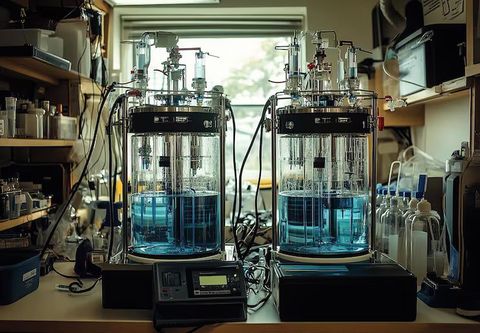
Laboratory membrane testing can evaluate flux, selectivity, fouling behavior, and retention characteristics before industrial-scale implementation.
Process Monitoring
Pressure sensors, flow meters, temperature sensors, conductivity meters, and other instruments can monitor membrane-system performance.
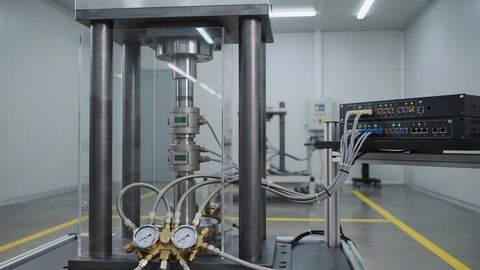
Pilot-Scale Systems
Pilot membrane systems allow processors to evaluate a food stream before installing larger equipment.
Pilot studies can help determine membrane type, operating pressure, flow conditions, cleaning requirements, and expected separation behavior.
Cleaning-In-Place Systems
CIP equipment can automate or standardize cleaning cycles for membrane systems.
Process Modeling
Engineering models can help evaluate mass balances, membrane area, flow rates, pressure requirements, concentration factors, and system configuration.
FAQs
What is membrane food processing?
Membrane food processing uses semi-permeable membranes to separate, clarify, concentrate, or purify food and beverage streams.
What are the main membrane filtration technologies?
The major technologies include microfiltration, ultrafiltration, nanofiltration, reverse osmosis, and membrane distillation.
How are membranes used in dairy processing?
Membranes can concentrate proteins, clarify milk, process whey, separate selected components, and support water management within dairy facilities.
What causes membrane fouling?
Fouling can result from proteins, fats, minerals, microorganisms, suspended solids, and other substances accumulating on or within the membrane.
What should manufacturers consider when selecting membrane processing equipment?
Important factors include feed composition, desired separation, membrane material, module configuration, capacity, pressure, temperature, cleaning requirements, food-contact compatibility, automation, and system maintenance.
Conclusion
Membrane food processing provides a versatile approach to separation, clarification, concentration, and fractionation across food and beverage manufacturing. Microfiltration, ultrafiltration, nanofiltration, reverse osmosis, and membrane distillation each provide different separation capabilities.
Modern systems combine membrane modules with pumps, tanks, sensors, automated controls, and cleaning systems. Developments in ceramic membranes, advanced materials, digital monitoring, fouling management, and process automation are expanding the role of membrane technologies in industrial food processing.