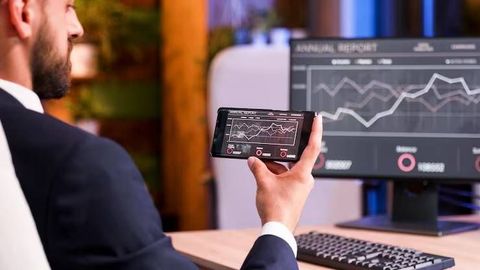
Trading Platforms Explained: Platform Types, Brokerage Technologies, Trading Tools, Global Providers and Financial Market Applications
Trading platforms are digital systems that allow users to access financial markets, analyze market movements, place orders, and monitor their portfolios. They connect traders with brokerage infrastructure and provide tools for understanding price movements, managing orders, and evaluating financial instruments.
Different platforms support different trading styles, financial products, and levels of market experience. Understanding their features, technologies, and limitations helps users make informed decisions about the platforms they choose.
What Are Trading Platforms?
A trading platform is software that enables users to interact with financial markets through a computer, smartphone, or web browser. Depending on the provider, it may include real-time market data, interactive charts, technical indicators, order management, portfolio tracking, and analytical tools.
Many platforms are provided by brokerage firms, while others are developed by independent technology companies and connected to supported brokers.
Common financial instruments available through trading platforms include:
Stocks and exchange-traded funds (ETFs)
Currencies and foreign exchange (forex)
Futures and options
Bonds and other fixed-income securities
Commodities
Cryptocurrency, where legally supported
The available instruments depend on the brokerage provider, account eligibility, regulatory requirements, and the user's location.
Types of Trading Platforms
1. Stock Trading Platforms
Stock trading platforms provide access to listed company shares and, in many cases, ETFs and other exchange-traded instruments. They commonly include market quotations, company information, price charts, watchlists, and order placement tools.
Investors may use these platforms to monitor individual companies, compare market performance, and manage long-term portfolios. Active traders may also rely on advanced charting and order-management features.
2. Online Brokerage Platforms
Online brokerage platforms allow users to open and manage brokerage accounts, research financial instruments, and submit orders through digital interfaces.
Their features may include:
Account and portfolio management
Market research and financial news
Trade confirmations and transaction history
Order types and execution controls
Tax reports and account statements
Some brokerage platforms focus on beginner-friendly interfaces, while others provide sophisticated analytical tools for experienced market participants.
3. Forex Trading Platforms
Forex platforms support trading in currency pairs, such as EUR/USD and GBP/USD. They typically provide currency quotations, exchange-rate charts, economic calendars, and tools for managing leveraged positions.
Forex trading involves substantial risk, particularly when leverage is used. Trading conditions, available currency pairs, and regulatory protections vary between providers and jurisdictions.
4. Algorithmic Trading Platforms
Algorithmic trading platforms allow users to create or deploy rules-based strategies that generate trading signals or submit orders automatically.
These platforms may support programming languages, strategy testing, historical market data, and automated execution. Their effectiveness depends on strategy design, data quality, transaction costs, market conditions, and execution reliability.
Automated trading does not guarantee profits, and poorly designed algorithms can generate unexpected losses.
5. AI-Powered Trading Platforms
AI-powered trading platforms use techniques such as machine learning, statistical analysis, and natural language processing to assist with market research and data interpretation.
Potential capabilities include identifying patterns, summarizing financial information, generating analytical signals, and supporting risk assessment. The reliability of these functions depends on the underlying models and available data.
AI-generated predictions may be inaccurate, especially during unexpected market events. Users should evaluate the methodology and limitations of these tools rather than treating automated predictions as certain outcomes.
6. Professional Trading Platforms
Professional trading platforms are designed for active traders, institutional participants, and users who require advanced market analysis or specialized execution capabilities.
Features may include multi-market monitoring, advanced charting, customizable workspaces, sophisticated order types, market-depth data, and connections to trading APIs.
These systems can require greater technical knowledge and may involve additional data, software, or brokerage fees.
Key Technologies Behind Trading Platforms
Modern trading platforms rely on several interconnected technologies to deliver market information and process transactions.
Market Data Infrastructure
Market data systems distribute quotations, trade information, historical prices, and other financial data. Some instruments provide delayed data, while others support real-time feeds subject to exchange permissions and subscription terms.
Data latency, accuracy, and availability can influence analytical decisions and trading operations.
Brokerage Connectivity and Order Routing
When a user submits an order, the platform communicates with brokerage systems that validate and route the instruction according to the applicable execution arrangements.
Depending on the instrument and provider, an order may be routed to an exchange, alternative trading venue, market maker, or another execution counterparty.
Order execution is not always immediate, and the final execution price can differ from the displayed quotation.
Application Programming Interfaces (APIs)
Trading APIs allow supported applications to exchange data and, where authorized, submit or manage orders.
Developers may use APIs to build portfolio dashboards, connect analytical systems, automate permitted workflows, or integrate trading data with other software.
API access can involve authentication requirements, usage limits, technical restrictions, and additional risk controls.
Cloud Computing and Cybersecurity
Cloud infrastructure helps platforms process data and support access across devices. Security technologies such as encryption, multi-factor authentication, access controls, and account monitoring help protect sensitive information.
Users should also review account recovery procedures, device security, and the provider's policies for handling personal and financial data.
Essential Trading Tools and Features
The functionality available on a trading platform can significantly affect how users analyze markets and manage their accounts.
Tool or feature | Primary purpose |
|---|---|
Interactive charts | Examine price movements across different periods |
Technical indicators | Analyze trends, momentum, and volatility |
Fundamental research | Review company financials and economic information |
Watchlists | Monitor selected instruments |
Order types | Specify how trading instructions should be executed |
Portfolio tracking | Review holdings, exposure, and performance |
Alerts and notifications | Receive updates about selected market conditions |
Backtesting | Evaluate strategies against historical data |
Risk-management tools | Monitor exposure and apply available trading controls |
Economic calendars | Track scheduled economic announcements |
Not every platform provides all these features. Some tools may also depend on subscription level, account type, exchange permissions, or the connected brokerage.
Global Trading Platform Providers
Several established companies provide trading software, brokerage accounts, or financial-market technology. Their products differ in supported markets, available instruments, pricing structures, and regulatory coverage.
Examples include:
Interactive Brokers — Provides multi-market brokerage access and professional trading tools in supported jurisdictions.
Charles Schwab — Offers brokerage accounts, investment research, and trading tools, primarily serving eligible US customers.
Fidelity Investments — Provides investment accounts, research resources, and trading capabilities for eligible customers.
Robinhood — Offers a mobile-oriented brokerage experience, with availability and supported products varying by market.
Webull — Provides digital brokerage access and market-analysis tools in supported regions.
eToro — Offers a multi-asset platform with social and portfolio-related features, subject to local availability.
IG — Provides trading access to various financial markets, depending on jurisdiction and account eligibility.
Zerodha — Provides online brokerage and trading technology for the Indian market.
Groww — Offers digital investment and brokerage products in India.
Upstox — Provides online trading tools and brokerage access in India.
These examples are not endorsements or a ranking. A platform's suitability depends on the user's location, financial objectives, experience, preferred instruments, and applicable regulations. Product availability can change over time.
Trading Platforms in the Indian Financial Market
India has a substantial digital brokerage ecosystem supported by market infrastructure and regulatory oversight. Users can access eligible securities and other financial instruments through platforms connected to recognized exchanges and registered intermediaries.
Examples of Indian brokerage providers include Zerodha, Groww, Angel One, Upstox, ICICI Direct, HDFC SKY, Kotak Neo, Motilal Oswal, 5paisa, and Dhan.
When evaluating a platform in India, users should consider:
Registration and regulatory status of the relevant intermediary
Access to NSE and BSE instruments, where applicable
Demat account and trading account requirements
Brokerage charges and other applicable fees
Availability of charting, research, and analytical tools
Customer support and complaint-resolution procedures
Security measures and account protection
Applicable rules for derivatives and leveraged trading
Users should verify the current registration status of the intermediary and review the latest regulatory information before opening an account.
How to Evaluate a Trading Platform
Choosing a trading platform requires more than comparing its interface or advertised features. A careful evaluation should consider practical functionality, security, transparency, and the user's intended activities.
Market Access
Confirm that the platform supports the exchanges, financial instruments, and account types you need. International market access may involve additional eligibility requirements and currency-related considerations.
Fees and Trading Conditions
Review brokerage charges, spreads, exchange fees, market-data subscriptions, currency-conversion charges, and any applicable account fees. For leveraged products, examine financing charges, margin requirements, and liquidation policies.
Execution Quality
Consider order-routing arrangements, execution speed, slippage, and the availability of different order types. Displayed prices do not necessarily represent the price at which an order will be filled.
Usability and Reliability
Evaluate navigation, chart readability, mobile access, platform stability, and the ease of reviewing transactions. Technical interruptions can be particularly consequential when positions require active management.
Security and Regulation
Check the legal entity responsible for the account, relevant regulatory registrations, asset-protection arrangements, and complaint procedures. Do not assume that all products or account balances receive the same protections.
Risks and Limitations of Trading Platforms
Trading platforms make financial markets more accessible, but they do not eliminate the risks associated with trading.
Market risk: Prices can move rapidly because of economic developments, company announcements, geopolitical events, and changes in investor expectations.
Leverage risk: Borrowed exposure can amplify both gains and losses. Certain leveraged products can result in substantial losses, depending on their structure and applicable protections.
Technology risk: Network interruptions, software defects, data delays, and outages may affect access or execution.
Cybersecurity risk: Phishing, compromised devices, weak passwords, and unauthorized account access can expose users to financial losses.
Behavioral risk: Frequent notifications, rapid order placement, and easy access to markets may encourage impulsive decisions.
Understanding these limitations and using appropriate risk controls are important parts of responsible platform use.
Future Developments in Trading Technology
Trading platforms continue to evolve as financial institutions adopt new technologies and respond to changing market requirements.
Several developments are shaping the sector:
Artificial intelligence: More advanced tools for processing financial information and supporting research.
Cloud-based infrastructure: Flexible computing systems for data processing and platform delivery.
Advanced analytics: Improved visualization, screening, and statistical analysis capabilities.
API-based integration: Greater connectivity between brokerage systems and external analytical applications.
Enhanced security: Expanded use of authentication controls, fraud detection, and account-monitoring technologies.
Digital asset infrastructure: Additional technologies for handling eligible digital assets in jurisdictions where their trading is permitted.
These developments may improve accessibility and analytical capabilities, but their effectiveness depends on implementation, oversight, data quality, and market conditions.
Conclusion
Trading platforms combine brokerage connectivity, financial data, analytical tools, and order-management technology to provide access to financial markets. From basic stock trading applications to professional and algorithmic systems, each platform serves different requirements.
Understanding platform types, evaluating fees and execution arrangements, checking regulatory status, and recognizing market and technology risks can help users make more informed decisions. A trading platform is a tool for accessing and analyzing markets, not a guarantee of financial returns.
Disclaimer - The information provided in this article is for general informational and educational purposes only. We do not sell financial products or provide financial services or personalized financial advice. We make no guarantees regarding the accuracy, reliability, or completeness of the information presented. This content should not be considered professional financial advice. Readers should conduct their own research and consult qualified professionals before making financial decisions.