PET Bottle Manufacturers and Production Process Guide
PET bottles are widely used across industries. They are commonly found in beverage packaging, food containers, personal care products and household applications. Their lightweight structure, transparency and suitability for different packaging formats make them a widely used plastic packaging option.
PET bottle manufacturing involves converting raw materials into preforms and then shaping them into bottles. PET bottle manufacturers use specialized production equipment to create containers in different sizes, shapes and designs. Understanding this process helps explain the role of manufacturing companies, suppliers, machinery and packaging technology.
What Is PET Bottle Manufacturing?
PET bottle manufacturing is the process of producing containers from polyethylene terephthalate, commonly known as PET. This material is a type of thermoplastic polyester used in various packaging applications.
The manufacturing process generally involves preparing PET material, producing preforms and shaping those preforms into finished bottles. The final product may vary in capacity, shape, neck size, thickness and intended use.
PET bottle manufacturing companies may produce finished bottles, PET preforms or both. Some facilities also operate integrated production lines that include material preparation, preform molding, bottle blowing and quality inspection.
Importance of PET Bottles in Packaging
PET bottles are used in many industries because their material properties support different packaging requirements.
Lightweight structure: PET containers are relatively lightweight, which can help reduce packaging weight during handling and transportation.
Transparency: Clear PET allows consumers and packaging teams to view the contents.
Design flexibility: Bottles can be manufactured in different shapes, capacities and neck configurations.
Shatter resistance: PET containers generally resist breaking differently from glass containers, although they can still become damaged.
Recycling potential: PET is recyclable where suitable collection, sorting and processing systems are available.
These characteristics make PET bottles relevant to beverage, food, personal care and household product packaging.
PET Bottle Manufacturing Process
The production process includes several stages. The exact method depends on the bottle design, production capacity and equipment used by the manufacturing facility.
Raw Material Preparation
PET resin is the primary raw material used in PET bottle production. It is supplied in small pellet form and prepared according to the processing requirements.
PET bottle raw material suppliers provide resin grades suitable for different applications. Before processing, the material may require controlled drying because moisture can affect its processing characteristics and the quality of the finished product.
PET Preform Manufacturing
The prepared PET material is heated and processed through injection molding to create preforms. A preform is a small, tube-shaped component with a finished neck section and a body that will later be expanded into a bottle.
PET preform manufacturers produce these components in different weights, dimensions and neck finishes. Preform specifications influence the shape, capacity and material distribution of the final container.
Bottle Blowing Process
Preforms are heated and transferred into bottle molds. Compressed air is then used to expand the softened material against the mold walls, forming the required bottle shape.
This process is commonly known as stretch blow molding. The finished container is cooled and removed from the mold for further inspection.
Inspection and Packaging
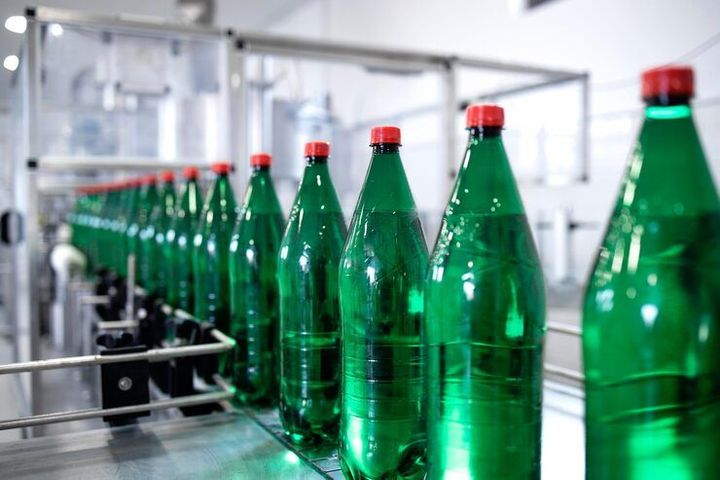
Finished bottles are checked for dimensions, appearance, weight and other specifications. Bottles that meet the required quality criteria may then be counted, packed and prepared for transportation or filling operations.
Machines Used in PET Bottle Production
PET bottle production machines perform different tasks throughout the manufacturing process. The equipment configuration depends on whether a facility produces preforms, finished bottles or both.
| Machine or Equipment | Main Function |
|---|---|
| PET resin dryer | Reduces moisture in PET material |
| Injection molding machine | Produces PET preforms |
| Preform mold | Forms the shape of preforms |
| PET bottle blowing machine | Converts preforms into bottles |
| Bottle molds | Determine bottle shape and dimensions |
| Air compressor | Supplies compressed air for bottle blowing |
| Cooling system | Supports temperature control during production |
| Inspection equipment | Checks bottle quality and specifications |
PET bottle making machine manufacturers develop equipment with different production capacities and automation features. PET bottle molding machines are selected according to material requirements, bottle designs and manufacturing processes.
Setting Up a PET Bottle Manufacturing Plant
A PET bottle manufacturing plant requires suitable machinery, infrastructure, trained operators and quality-control procedures. Planning depends on the type of bottles being produced and the expected production volume.
Space and Infrastructure
The facility needs adequate space for machinery, raw material storage, finished product handling and maintenance activities. Electrical systems, ventilation, compressed-air supply and cooling arrangements must match the equipment specifications.
Production Line Configuration
A PET bottle production line may include separate preform production and bottle-blowing sections. Some facilities purchase ready-made preforms and focus only on bottle production, while integrated facilities manage both stages.
Workforce and Operations
Operators and technicians are responsible for machine operation, process monitoring, inspection and maintenance. Training helps ensure that production procedures are followed consistently.
Storage and Material Handling
Raw materials and finished bottles require appropriate storage arrangements. Facilities should protect materials from contamination, moisture and physical damage according to their handling requirements.
Applications of PET Bottles
PET bottles are used in several packaging categories because they can be manufactured in different sizes and designs.
Beverage packaging: Water, carbonated drinks, juices and other beverages are commonly packaged in PET containers.
Food packaging: Certain food products use PET bottles and containers designed for their specific storage requirements.
Personal care products: Shampoo, liquid soap and selected cosmetic products may use PET packaging.
Household products: Cleaning liquids and other household formulations may be packaged in suitable PET containers.
Pharmaceutical packaging: Selected non-sterile products use PET containers when the material and packaging design meet applicable requirements.
The suitability of PET depends on the product, storage conditions, chemical compatibility and relevant packaging regulations.
Factors to Consider When Choosing PET Bottle Suppliers
Selecting PET bottle suppliers requires an understanding of product specifications and production requirements. Buyers and packaging teams commonly review the following factors:
Material specifications: Check the PET material grade and its suitability for the intended application.
Bottle dimensions: Review capacity, weight, neck finish, shape and wall thickness.
Quality procedures: Understand how bottles are inspected and how product consistency is monitored.
Production capacity: Confirm whether the supplier can meet the required quantity and delivery schedule.
Customization: Review available mold designs, colors and packaging specifications.
Regulatory requirements: For food-contact and other regulated applications, confirm applicable material and packaging compliance.
PET bottle wholesale suppliers may provide standard bottle designs or customized packaging formats depending on their manufacturing capabilities.
Frequently Asked Questions
What raw material is used in PET bottle manufacturing?
Polyethylene terephthalate, or PET, is the primary material. It is supplied as resin pellets and processed into preforms before bottle formation.
What is a PET bottle production line?
A PET bottle production line is a group of machines used to manufacture bottles. It may include material preparation, preform production, bottle blowing, cooling and inspection equipment.
What is the difference between a PET preform and a PET bottle?
A preform is a small molded component used as the starting shape for a bottle. A PET bottle is produced by heating and expanding that preform inside a mold.
Are PET bottles recyclable?
PET bottles are recyclable in many regions, depending on local collection, sorting and recycling infrastructure. Recycling practices and accepted materials vary by location.
Conclusion
PET bottle manufacturing involves material preparation, preform molding, bottle blowing and quality inspection. Each stage contributes to the dimensions, appearance and functional characteristics of the finished container.
Understanding production machinery, raw materials, plant requirements and packaging applications provides a useful overview of the industry. Manufacturing facilities and packaging teams can use these factors to evaluate production processes and identify suitable PET bottle specifications.