Marine Exhaust Treatment Explained: Exhaust Gas Cleaning Technologies, Emission Control Systems, Marine Equipment, Global Manufacturers, Suppliers and Maritime Applications
Marine exhaust treatment refers to technologies and equipment used to control pollutants released from marine engines and onboard combustion systems. Marine exhaust treatment can involve exhaust gas cleaning, catalytic reduction, particulate filtration, exhaust gas recirculation, and related emission-control technologies.
These systems are used across commercial vessels, cargo ships, tankers, container ships, passenger vessels, offshore platforms, tugboats, ferries, and specialized marine equipment. Their configuration depends on engine type, fuel characteristics, vessel design, operating profile, and applicable maritime emission requirements.
What Is Marine Exhaust Treatment?
Marine exhaust treatment is the process of reducing or controlling pollutants contained in exhaust gases produced by marine engines and auxiliary combustion equipment.
Marine diesel engines can generate several pollutants, including:
Sulfur oxides (SOx)
Nitrogen oxides (NOx)
Particulate matter (PM)
Carbon monoxide (CO)
Unburned hydrocarbons
Carbon dioxide (CO₂)
Different treatment technologies address different pollutants. For example, scrubber systems primarily address sulfur oxides, while selective catalytic reduction systems are designed to reduce nitrogen oxides.
A complete marine emission-control configuration can combine several technologies to meet operational and environmental requirements.
Why Marine Exhaust Treatment Matters
Marine exhaust treatment plays an important role in reducing atmospheric emissions from shipping and marine transportation.
Modern marine emission-control systems can help operators:
Reduce sulfur oxide emissions
Control nitrogen oxide emissions
Reduce particulate emissions
Improve exhaust-gas quality
Support compliance with applicable maritime requirements
Integrate emission-control equipment with existing engines
Monitor exhaust-treatment performance
Improve environmental performance of vessel operations
The appropriate technology depends on the vessel's engine, fuel, exhaust flow, available installation space, operating conditions, and required emission-control performance.
Major Marine Exhaust Treatment Technologies
Several technologies are used for marine exhaust treatment.
Exhaust Gas Cleaning Systems
Exhaust gas cleaning systems, commonly known as scrubbers, remove certain pollutants from engine exhaust before the gas is released into the atmosphere.
Marine scrubbers can use liquid treatment media to absorb or neutralize sulfur compounds in exhaust gas.
Common configurations include:
Open-loop scrubbers
Closed-loop scrubbers
Hybrid scrubbers
Seawater-based systems
Freshwater-based systems
Scrubber systems typically include pumps, washwater equipment, exhaust ducts, monitoring instruments, control systems, and treatment equipment.
Selective Catalytic Reduction Systems
Selective catalytic reduction (SCR) systems reduce nitrogen oxide emissions from marine engines.
In an SCR system, a reducing agent is introduced into the exhaust stream before the gases pass through a catalyst. Chemical reactions convert nitrogen oxides primarily into nitrogen and water.
Marine SCR systems generally include:
Dosing equipment
Catalyst modules
Control units
Sensors
Exhaust piping
Temperature monitoring
Reducing-agent storage and handling equipment
SCR technology is particularly relevant for marine engines where NOx reduction is a major requirement.
Exhaust Gas Recirculation
Exhaust gas recirculation (EGR) reduces nitrogen oxide formation by recirculating a controlled portion of exhaust gas back into the engine's combustion process.
By modifying combustion conditions, EGR can reduce the formation of nitrogen oxides.
Marine EGR systems can contain:
EGR valves
Gas coolers
Scrubbing equipment
Pumps
Control systems
Sensors
Piping and ductwork
The technology can be integrated into large marine diesel engine systems.
Diesel Particulate Filters
Diesel particulate filters (DPFs) capture particulate matter from diesel exhaust.
They are more common in applications where particulate emissions require additional control, particularly smaller marine engines and specialized equipment.
A marine particulate filtration system can include:
Filter substrates
Regeneration systems
Pressure sensors
Temperature sensors
Control modules
Exhaust piping
Oxidation Catalysts
Diesel oxidation catalysts can reduce certain gaseous pollutants such as carbon monoxide and unburned hydrocarbons.
These systems use catalyst materials to promote chemical reactions within the exhaust stream.
They may be integrated with other exhaust aftertreatment technologies depending on the engine configuration.
Marine Exhaust Treatment Equipment
A marine exhaust treatment installation consists of multiple mechanical, electrical, and control components.
| Equipment | Primary Function |
|---|---|
| Scrubber | Reduces sulfur-related exhaust pollutants |
| SCR reactor | Reduces nitrogen oxides |
| EGR system | Controls NOx formation |
| Particulate filter | Captures particulate matter |
| Oxidation catalyst | Controls CO and hydrocarbons |
| Exhaust gas analyzer | Measures exhaust composition |
| Pumps | Circulate treatment fluids |
| Dosing system | Introduces reducing agents |
| Control system | Automates treatment operation |
| Sensors | Monitor operating parameters |
| Heat exchangers | Manage exhaust or fluid temperatures |
| Exhaust ducts | Transport treated gases |
| Washwater equipment | Supports scrubber operation |
Marine Exhaust Gas Cleaning Systems
Marine exhaust gas cleaning systems are engineered around the characteristics of the engine and vessel.
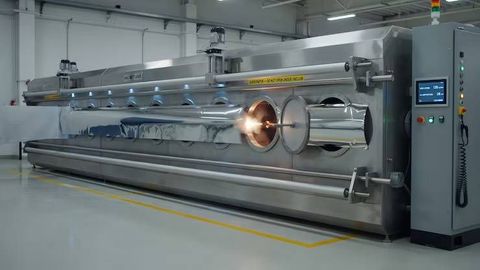
A typical scrubber arrangement can include an exhaust inlet, gas-cleaning chamber, washwater circulation system, monitoring instruments, discharge-management equipment, and treated exhaust outlet.
Open-Loop Scrubbers
Open-loop systems use seawater as the treatment medium. Exhaust gases pass through a scrubber where sulfur compounds interact with the alkaline seawater.
Closed-Loop Scrubbers
Closed-loop systems recirculate treatment water and can use alkaline chemicals to maintain the required chemical conditions.
Hybrid Scrubbers
Hybrid systems can operate in open-loop or closed-loop modes, providing operational flexibility under different conditions.
Marine NOx Emission Control
Nitrogen oxide control is an important area of marine exhaust treatment.
NOx emissions are strongly influenced by combustion temperature, pressure, fuel characteristics, engine design, and operating conditions.
Major technologies include:
Selective catalytic reduction
Exhaust gas recirculation
Engine combustion optimization
Advanced fuel-injection systems
Electronic engine control
SCR and EGR can be integrated into larger marine emission-control architectures.
Marine Exhaust Monitoring Systems
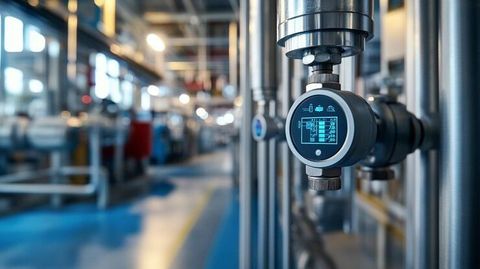
Monitoring equipment provides information about exhaust composition and system performance.
Common measurements can include:
SOx-related parameters
NOx concentration
CO₂
Oxygen concentration
Exhaust temperature
Exhaust pressure
Washwater parameters
Flow rate
Differential pressure
Continuous monitoring can help operators identify abnormal conditions and evaluate treatment-system performance.
Manufacturing Process of Marine Exhaust Treatment Equipment
Manufacturing marine exhaust treatment equipment involves several stages.
Engineering and System Design
Engineers determine exhaust flow, temperature, pressure, material requirements, vessel constraints, and treatment objectives.
Material Selection
Materials are selected according to exposure to exhaust gases, seawater, washwater, temperature, corrosion, and mechanical loads.
Common materials include:
Stainless steel
Carbon steel
Corrosion-resistant alloys
Marine-grade piping
Specialized catalyst substrates
Engineering plastics for selected fluid systems
Component Fabrication
Major components such as scrubber towers, ducts, tanks, frames, piping assemblies, and housings are fabricated using cutting, forming, welding, machining, and surface-treatment processes.
Catalyst and Filter Integration
SCR catalysts, particulate filters, and oxidation catalysts are assembled into appropriately designed housings.
Instrumentation and Controls
Sensors, control panels, analyzers, valves, pumps, and automation equipment are integrated with the treatment system.
Testing
Equipment can undergo pressure testing, leak testing, functional testing, instrumentation checks, control-system testing, and performance verification before deployment.
Marine Exhaust Treatment System Integration
Installing exhaust treatment equipment on a vessel requires careful integration with existing machinery.
Important considerations include:
Engine exhaust flow
Exhaust temperature
Backpressure
Available machinery-space area
Equipment weight
Piping configuration
Electrical requirements
Cooling requirements
Washwater handling
Control-system integration
Maintenance access
For large vessels, equipment may need to be installed within limited machinery spaces while maintaining access to engines and other critical equipment.
Global Marine Exhaust Treatment Manufacturers and Suppliers
The global market includes companies specializing in marine engines, exhaust gas cleaning systems, catalysts, emission-control equipment, marine automation, pumps, valves, monitoring systems, and integrated environmental technologies.
Supplier categories include:
Marine exhaust scrubber manufacturers
Marine SCR system manufacturers
Marine EGR equipment manufacturers
Exhaust gas cleaning equipment suppliers
Marine emission-control equipment manufacturers
Catalyst manufacturers
Exhaust monitoring equipment suppliers
Marine automation companies
Pump and fluid-handling equipment suppliers
Marine engineering companies
System integration companies
Selection of a manufacturer or supplier generally depends on technical compatibility, vessel requirements, equipment certification, lifecycle considerations, installation requirements, and regional support capabilities.
Maritime Applications of Exhaust Treatment
Marine exhaust treatment systems are used across many vessel categories.
Container Ships
Large container ships use high-capacity propulsion engines and auxiliary generators, creating substantial exhaust flows that may require specialized emission-control systems.
Tankers
Oil, chemical, and product tankers can use exhaust treatment technologies on propulsion and auxiliary engines.
Bulk Carriers
Bulk carriers use large marine diesel engines and can incorporate exhaust gas cleaning and NOx-control technologies.
Cruise Ships
Passenger vessels can use multiple emission-control technologies because they operate several engines and auxiliary systems.
Ferries
Ferries may require compact emission-control equipment because of limited machinery-space availability and frequent operating cycles.
Tugboats
Tugboats often use high-power engines relative to their vessel size, creating demand for compact and robust exhaust treatment configurations.
Offshore Support Vessels
Offshore vessels can use emission-control systems on propulsion engines, generators, and other combustion equipment.
Workboats
Commercial workboats can incorporate exhaust aftertreatment equipment based on engine size, operating profile, and environmental requirements.
Factors for Selecting Marine Exhaust Treatment Equipment
Choosing a marine exhaust treatment system requires evaluation of both technical and operational factors.
Engine Characteristics
Engine power, exhaust flow, temperature, fuel type, and operating profile directly affect system design.
Pollutant Type
The required technology depends on whether the primary target is SOx, NOx, particulate matter, carbon monoxide, hydrocarbons, or a combination.
Vessel Configuration
Available installation space, structural limitations, exhaust routing, and equipment access must be considered.
Operating Environment
Saltwater exposure, humidity, temperature, vibration, and corrosion can influence material and component selection.
Automation
Modern systems can use PLCs, sensors, remote monitoring, alarms, data logging, and automated control sequences.
Maintenance Requirements
Filter replacement, catalyst inspection, pump maintenance, sensor calibration, cleaning, and other maintenance activities should be considered during system selection.
Marine Exhaust Treatment Technology Comparison
| Technology | Main Target | Typical Equipment |
|---|---|---|
| Scrubber | SOx | Scrubber tower, pumps, washwater system |
| SCR | NOx | Catalyst, dosing system, controls |
| EGR | NOx | EGR valve, cooler, scrubber |
| DPF | Particulate matter | Filter, regeneration system |
| Oxidation catalyst | CO and hydrocarbons | Catalyst module |
| Exhaust monitoring | Emission measurement | Sensors, analyzers, control system |
Benefits of Integrated Marine Emission Control
An integrated marine exhaust treatment architecture can combine several technologies to address different pollutants.
Potential operational advantages include:
Multi-pollutant emission control
Automated system operation
Continuous performance monitoring
Integration with vessel automation
Data-based maintenance planning
Improved exhaust management
Flexible system configuration
Compatibility with different vessel classes
The actual performance depends on system design, engine conditions, maintenance, fuel characteristics, and operating practices.
Future Trends in Marine Exhaust Treatment
Marine emission-control technology continues to develop alongside changes in marine propulsion and fuel systems.
Important trends include:
Digital Monitoring
Connected sensors and data platforms can provide continuous information about exhaust conditions and treatment-system performance.
Compact Equipment
Manufacturers are developing equipment configurations that reduce space requirements and simplify integration into existing vessels.
Advanced Catalysts
Catalyst development can improve pollutant conversion while addressing temperature, durability, and marine operating requirements.
Hybrid Emission Control
Hybrid systems can combine multiple treatment technologies within a coordinated control architecture.
Alternative-Fuel Integration
The growth of alternative marine fuels is creating new requirements for exhaust monitoring and aftertreatment systems.
Predictive Maintenance
Condition monitoring and data analytics can help identify changes in equipment performance before they develop into major operational problems.
Frequently Asked Questions
What is marine exhaust treatment?
Marine exhaust treatment includes technologies and equipment designed to reduce or control pollutants in exhaust gases produced by marine engines and combustion systems.
What is a marine scrubber?
A marine scrubber is an exhaust gas cleaning system designed primarily to reduce sulfur-related pollutants from marine engine exhaust.
What does a marine SCR system do?
A marine selective catalytic reduction system reduces nitrogen oxide emissions by using a reducing agent and catalyst to convert NOx into primarily nitrogen and water.
What is the difference between scrubbers and SCR systems?
Scrubbers primarily target sulfur oxides, while SCR systems are designed primarily for nitrogen oxide reduction. They address different pollutants and can be used as part of a broader emission-control strategy.
Where are marine exhaust treatment systems used?
They can be used on container ships, tankers, bulk carriers, cruise ships, ferries, tugboats, offshore support vessels, workboats, and other marine platforms.
Conclusion
Marine exhaust treatment combines mechanical equipment, chemical processes, catalysts, filtration technologies, monitoring systems, and automation to control pollutants from marine engines. Major technologies include exhaust gas cleaning systems, scrubbers, selective catalytic reduction, exhaust gas recirculation, particulate filtration, and oxidation catalysts.
As maritime propulsion systems evolve, marine exhaust treatment is becoming increasingly integrated with vessel automation, monitoring, digital diagnostics, and alternative-fuel technologies. Proper system selection requires consideration of engine characteristics, exhaust conditions, vessel configuration, pollutant targets, operating environment, maintenance requirements, and applicable maritime requirements.