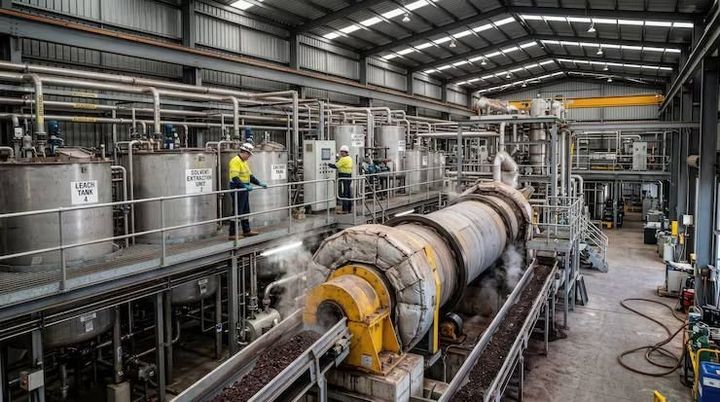
Industrial Processing Equipment Explained: Equipment Types, Processing Technologies, Manufacturing Processes, Global Manufacturers, Suppliers and Industrial Applications
Industrial processing equipment refers to machinery and integrated systems used to transform raw materials into intermediate or finished products. Industrial processing equipment is used across chemical processing, food and beverage, pharmaceuticals, plastics, minerals, energy, and general manufacturing.
These systems can perform operations such as mixing, grinding, separating, heating, cooling, drying, filtering, conveying, and material handling. Equipment selection depends on material characteristics, production capacity, operating conditions, automation requirements, and the desired processing result.
Why Industrial Processing Equipment Matters
Modern processing facilities rely on equipment that can provide consistent material handling and controlled production conditions. Properly selected machinery can support:
Consistent processing parameters
Continuous or batch production
Controlled temperature and pressure
Material separation and filtration
Automated material movement
Improved process monitoring
Production scalability
Reduced manual intervention
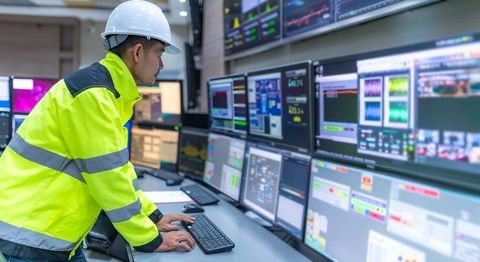
Industrial processing equipment can also be integrated with sensors, programmable logic controllers, distributed control systems, and manufacturing software for automated process management.
Types of Industrial Processing Equipment
Different manufacturing operations require specialized equipment. Major categories include the following.
Industrial Mixing Equipment
Mixers and blenders combine liquids, powders, granules, pastes, or other materials. Common designs include:
Ribbon mixers
Paddle mixers
High-shear mixers
Static mixers
Double-cone blenders
Batch mixing systems
Mixing equipment is used in chemical, pharmaceutical, food, plastics, and specialty-material production.
Industrial Grinding and Crushing Equipment
Grinding and crushing systems reduce material particle size. Crushers are generally used for larger feed materials, while mills and pulverizers produce finer particles.
Typical equipment includes jaw crushers, cone crushers, hammer mills, ball mills, roller mills, and industrial pulverizers.
Industrial Separation Equipment
Separation systems divide materials according to properties such as particle size, density, magnetic response, or phase.
Examples include:
Centrifuges
Cyclone separators
Magnetic separators
Vibratory separators
Air classifiers
Hydrocyclones
Industrial Filtration Equipment
Filtration systems remove suspended solids, contaminants, or particles from liquids and gases. Equipment can include cartridge filters, bag filters, membrane filtration systems, filter presses, and industrial dust collectors.
Industrial Drying Equipment
Drying equipment removes moisture or solvents from materials. Common technologies include rotary dryers, tray dryers, spray dryers, fluid-bed dryers, vacuum dryers, and continuous drying systems.
Industrial Heating and Cooling Equipment
Thermal processing equipment controls the temperature of materials during manufacturing. Industrial systems include process heaters, heat exchangers, furnaces, industrial ovens, chillers, and cooling systems.
Industrial Conveying Equipment
Conveyors transport materials between processing stages. Common systems include belt conveyors, screw conveyors, roller conveyors, bucket elevators, pneumatic conveying systems, and chain conveyors.
Industrial Processing Technologies
Processing technology determines how raw materials are transformed during production.
Batch Processing
Batch processing handles a defined quantity of material during each production cycle. It is commonly used when products require different formulations or controlled production sequences.
Continuous Processing
Continuous processing moves materials through production equipment without stopping between individual batches. It is frequently used for high-volume manufacturing operations.
Thermal Processing
Thermal processing applies controlled heating or cooling to achieve a specific physical or chemical transformation. Temperature control, residence time, heat-transfer characteristics, and material properties are important design considerations.
Mechanical Processing
Mechanical processing changes material size, shape, consistency, or physical characteristics. Crushing, grinding, mixing, cutting, compacting, and conveying are common mechanical operations.
Separation and Purification
Separation technologies isolate specific components from mixtures. Filtration, centrifugation, distillation, membrane separation, and classification are used according to material and process requirements.
Manufacturing Process of Industrial Processing Equipment
Manufacturing industrial processing machinery involves engineering, material selection, fabrication, assembly, testing, and quality inspection.
1. Process Requirement Analysis
Engineers establish capacity, material characteristics, operating temperature, pressure, flow rate, environmental conditions, and process configuration.
2. Equipment Design
Computer-aided engineering and 3D modeling are used to develop equipment geometry and component specifications.
3. Material Selection
Materials can include carbon steel, stainless steel, aluminum, specialty alloys, engineering plastics, and composite materials. Material selection depends on mechanical loads, temperature, corrosion, hygiene, and chemical compatibility.
4. Component Fabrication
Manufacturing can involve:
CNC machining
Laser cutting
Plasma cutting
Sheet-metal fabrication
Welding
Forming
Casting
Surface finishing
5. Assembly
Fabricated components are assembled into complete machines or processing systems. Motors, pumps, valves, sensors, control panels, and other components may be integrated at this stage.
6. Testing and Inspection
Manufacturers can conduct dimensional inspection, pressure testing, performance testing, electrical testing, vibration checks, and control-system verification before equipment is delivered.
Automation in Industrial Processing Equipment
Automation has become an important part of modern processing facilities. Sensors measure operating conditions while controllers regulate equipment according to predefined process parameters.
Typical automation components include:
PLC control systems
Human-machine interfaces
Industrial sensors
Variable-frequency drives
Motor control systems
SCADA platforms
Industrial communication networks
Process instrumentation
Advanced facilities may also use industrial IoT platforms, predictive analytics, digital twins, and manufacturing execution systems.
Industrial Processing Equipment Comparison
| Equipment Type | Main Function | Common Applications |
|---|---|---|
| Industrial Mixer | Material blending | Chemicals, food, pharmaceuticals |
| Crusher | Size reduction | Mining, aggregates |
| Grinder | Fine particle reduction | Minerals, chemicals |
| Separator | Material separation | Mining, recycling |
| Filter | Particle removal | Chemicals, water processing |
| Dryer | Moisture removal | Food, chemicals, minerals |
| Heat Exchanger | Heat transfer | Chemical, energy, process plants |
| Conveyor | Material movement | Manufacturing, logistics |
| Reactor | Controlled chemical processing | Chemical and pharmaceutical production |
| Centrifuge | Phase or particle separation | Pharmaceutical, chemical, food |
Factors Affecting Industrial Processing Equipment Cost
The total cost of industrial processing equipment depends on technical specifications and plant requirements. Important factors include:
Equipment capacity
Material of construction
Automation level
Motor and drive configuration
Temperature and pressure requirements
Process complexity
Custom engineering
Installation requirements
Safety systems
Instrumentation
Environmental requirements
Maintenance requirements
A basic standalone machine can have substantially different specifications from a fully automated processing line, so equipment comparisons should consider total system configuration rather than equipment size alone.
Global Manufacturers and Suppliers
Industrial processing equipment is manufactured and supplied by companies specializing in particular processing technologies. Supplier categories can include:
Process equipment manufacturers
Machinery manufacturers
Engineering companies
System integrators
Component suppliers
Automation providers
Industrial distributors
Specialized processing-equipment suppliers
When evaluating an industrial processing equipment supplier, organizations commonly examine technical specifications, production capacity, material compatibility, documentation, testing procedures, automation compatibility, spare-parts availability, and installation requirements.
Industrial Applications
Industrial processing equipment is used across numerous sectors.
Chemical Processing
Mixers, reactors, pumps, heat exchangers, filtration systems, and separation equipment support chemical production and material transformation.
Food and Beverage
Processing equipment is used for mixing, grinding, heating, cooling, drying, conveying, filling, and packaging.
Pharmaceutical Manufacturing
Controlled processing environments use specialized mixing, granulation, drying, filtration, and material-handling systems.
Plastics and Polymer Processing
Extruders, mixers, pelletizers, dryers, material-handling systems, and cooling equipment support polymer processing.
Mining and Minerals
Crushers, mills, classifiers, screens, separators, conveyors, and material-handling systems process mineral resources.
Energy and Power
Industrial processing equipment supports fuel processing, cooling systems, heat transfer, water treatment, and other plant operations.
Waste and Recycling
Sorting, shredding, crushing, separation, filtration, conveying, and compacting systems are used in recycling and waste-processing facilities.
How to Select Industrial Processing Equipment
Selecting appropriate equipment requires evaluating both the processing requirements and the complete production environment.
Consider:
Material characteristics — Understand particle size, viscosity, density, moisture, abrasiveness, and chemical compatibility.
Production capacity — Determine required throughput and operating hours.
Process configuration — Decide whether batch or continuous processing is appropriate.
Operating conditions — Evaluate temperature, pressure, flow, and environmental conditions.
Automation requirements — Determine the required level of process monitoring and control.
Maintenance requirements — Consider accessibility, wear components, inspection intervals, and spare parts.
Plant integration — Confirm compatibility with existing conveyors, pumps, controls, utilities, and production systems.
Safety requirements — Evaluate guarding, pressure protection, electrical systems, and process-specific safety controls.
Frequently Asked Questions
What is industrial processing equipment?
Industrial processing equipment is machinery used to transform, treat, separate, move, heat, cool, dry, mix, or otherwise process raw and intermediate materials during industrial production.
What are the main types of industrial processing equipment?
Major categories include mixers, crushers, grinders, separators, filters, dryers, heat exchangers, conveyors, reactors, pumps, and material-handling systems.
Where is industrial processing equipment used?
It is used in chemical processing, food and beverage, pharmaceuticals, plastics, mining, minerals, energy, recycling, water treatment, and general manufacturing.
What factors affect industrial processing equipment cost?
Capacity, materials, automation, process complexity, operating conditions, equipment configuration, customization, instrumentation, installation, and safety requirements can all affect the overall cost.
How is industrial processing equipment automated?
Automation commonly uses PLCs, sensors, HMIs, variable-frequency drives, SCADA systems, industrial networks, and process-control instrumentation.
Conclusion
Industrial processing equipment forms a fundamental part of modern manufacturing and material-transformation operations. Equipment such as mixers, crushers, grinders, separators, filters, dryers, conveyors, heat exchangers, and reactors can be configured for different production requirements.
As manufacturing facilities adopt greater automation and connected-process technologies, industrial processing systems are increasingly integrated with sensors, PLCs, SCADA, industrial IoT platforms, and advanced process-control technologies. Careful evaluation of materials, capacity, operating conditions, automation, safety, maintenance, and plant integration can help organizations identify equipment configurations appropriate for their processing requirement