Hospital Equipment Guide to Types, Uses and Selection Criteria
Hospitals depend on equipment for everyday patient care. From basic examination tools to advanced medical machines, these products support diagnosis, treatment, monitoring and recovery.
Hospital equipment manufacturers, medical equipment manufacturers and hospital equipment suppliers contribute to the availability of products used across different healthcare departments. The equipment required by a healthcare facility depends on its size, specialties and patient-care responsibilities. Understanding the main categories, applications and selection factors can help readers learn how hospital equipment supports modern medical environments.
Understanding Hospital Equipment
Hospital equipment includes medical devices, furniture, machines and instruments used in healthcare facilities. These products help doctors, nurses, technicians and other healthcare professionals perform clinical and administrative activities.
Some equipment is designed for patient examination, while other products support surgery, laboratory testing, emergency care and long-term monitoring. Hospital furniture manufacturers also contribute essential items such as beds, examination tables, medical cabinets and patient seating.
Equipment can be broadly classified into diagnostic, monitoring, surgical, respiratory, laboratory and patient-care categories. Each category serves a different purpose, and hospitals select products according to their operational and clinical requirements.
Importance of Hospital Equipment
Hospital equipment supports several important activities within healthcare facilities. Its functions extend from routine patient examinations to specialized medical procedures.
Supporting Diagnosis
Diagnostic machines help healthcare professionals examine body structures and identify possible medical conditions. X-ray systems, ultrasound machines, CT scanners and laboratory analyzers are examples of commonly used diagnostic equipment.
Monitoring Patient Conditions
Monitoring devices measure health indicators such as heart rate, blood pressure, oxygen saturation and body temperature. These measurements help medical teams observe changes in a patient's condition.
Assisting Treatment and Surgery
Surgical instruments, anesthesia machines, ventilators and infusion pumps support different medical procedures and treatment activities. Their applications depend on the patient's needs and the clinical team's decisions.
Improving Patient Care
Hospital beds, wheelchairs, stretchers and patient transfer systems support everyday care activities. They help healthcare staff position, move and accommodate patients in different hospital settings.
Major Types of Hospital Equipment
Hospitals use different equipment categories depending on their departments and medical specialties. The following examples explain some commonly used products.
Diagnostic Equipment
Diagnostic equipment helps healthcare professionals examine patients and obtain medical information. Common examples include:
X-ray machines: Produce images of internal body structures, particularly bones and the chest.
Ultrasound systems: Use sound waves to create images of organs and tissues.
CT scanners: Produce detailed cross-sectional images of different body areas.
MRI scanners: Use magnetic fields and radio waves to create internal body images.
ECG machines: Record the electrical activity of the heart.
Patient Monitoring Equipment
Patient monitoring equipment displays important physiological measurements. Patient monitoring equipment suppliers provide devices used in intensive care units, emergency departments and operating rooms.
Examples include multiparameter monitors, pulse oximeters, blood pressure monitors, cardiac monitors and fetal monitoring systems. The required features depend on the type of monitoring and the clinical environment.
ICU Equipment
Intensive care units require specialized equipment for patients who need continuous observation or advanced medical support. ICU equipment suppliers typically deal with products such as ventilators, infusion pumps, suction machines, oxygen delivery systems and multiparameter monitors.
These devices support different aspects of intensive care. Their operation requires trained healthcare professionals and appropriate monitoring procedures.
Operation Theatre Equipment
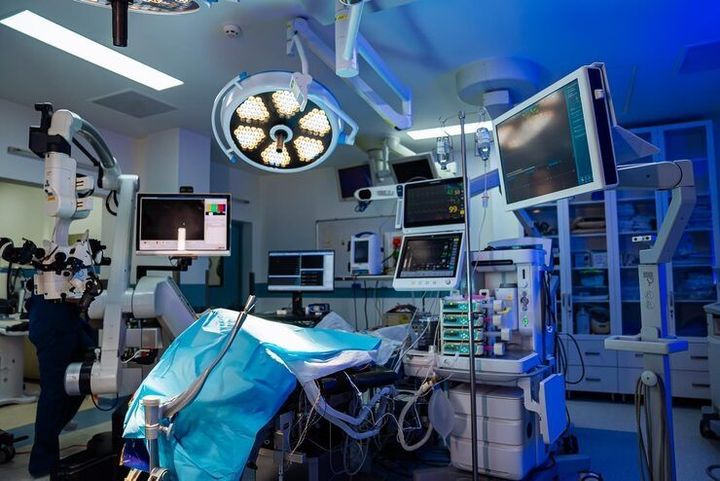
Operation theatres use specialized equipment for surgical procedures and anesthesia. Operation theatre equipment manufacturers produce or supply products such as operating tables, surgical lights, anesthesia machines, electrosurgical units and surgical instruments.
The equipment arrangement depends on the types of procedures performed, available space and operating-room requirements.
Hospital Furniture
Hospital furniture supports patient accommodation, examination and movement. Common products include adjustable beds, bedside cabinets, examination tables, waiting-area chairs, stretchers and medical trolleys.
Hospital furniture manufacturers develop different designs according to the needs of general wards, intensive care units, maternity departments and other healthcare areas.
Laboratory Equipment
Laboratories use specialized instruments to examine blood, urine and other biological samples. Common examples include microscopes, centrifuges, hematology analyzers, biochemistry analyzers and laboratory refrigerators.
These instruments support diagnostic testing and require appropriate handling, calibration and quality-control procedures.
Hospital Equipment Used Across Different Departments
Equipment requirements vary between departments because each area performs different medical activities.
Hospital Department | Common Equipment |
|---|---|
Emergency Department | Stretchers, defibrillators, oxygen systems and patient monitors |
Intensive Care Unit | Ventilators, infusion pumps and multiparameter monitors |
Operation Theatre | Surgical lights, operating tables and anesthesia machines |
Radiology Department | X-ray, MRI, CT and ultrasound systems |
Laboratory | Microscopes, centrifuges and diagnostic analyzers |
General Ward | Hospital beds, wheelchairs and patient-care devices |
Maternity Department | Fetal monitors and delivery beds |
This classification provides a general overview. Actual equipment requirements depend on the hospital's specialties, patient population and level of care.
Hospital Equipment Manufacturers and Suppliers
Hospital equipment manufacturers and suppliers are part of the medical equipment distribution network. Manufacturers develop or produce medical devices, furniture and related products, while suppliers and distributors help make equipment available to healthcare facilities.
Hospital equipment suppliers may handle several product categories, including diagnostic machines, patient-care devices, furniture and surgical instruments. Hospital medical equipment suppliers may also focus on particular departments or medical specialties.
Medical equipment wholesale suppliers generally operate through bulk distribution arrangements. Hospital equipment distributors may coordinate product availability, delivery, installation arrangements and manufacturer-related support, depending on their business responsibilities.
When evaluating manufacturers or suppliers, healthcare facilities can review product specifications, regulatory documentation, warranty conditions, maintenance arrangements and technical support.
Factors to Consider When Selecting Hospital Equipment
Selecting hospital equipment requires an understanding of clinical needs and practical operating conditions. The following considerations can help healthcare facilities evaluate different products.
Clinical requirements: Identify the department's activities and the functions needed from the equipment.
Safety and compliance: Review applicable regulatory requirements, product documentation and safety information.
Ease of operation: Consider whether the equipment is suitable for the intended users and available training.
Space and infrastructure: Check room dimensions, electrical requirements, ventilation and installation conditions.
Maintenance: Understand inspection schedules, calibration needs and replacement-part requirements.
Technical support: Review available training, repair arrangements and manufacturer support.
Compatibility: Check whether the equipment can work with existing hospital systems and infrastructure.
Maintenance and Safety of Hospital Equipment
Regular maintenance is important for the reliable operation of medical equipment. Hospitals generally follow manufacturer instructions and established maintenance procedures to identify technical problems and reduce equipment downtime.
Common practices include routine inspections, preventive maintenance, calibration where required, cleaning and appropriate disinfection. Maintenance records help healthcare facilities track inspections, repairs and equipment performance.
Staff training is equally important. Healthcare professionals should understand the correct operating procedures, safety precautions and limitations of the equipment they use. Defective equipment should be removed from use until it has been assessed and cleared for operation.
Frequently Asked Questions
What are the main types of hospital equipment?
Major categories include diagnostic machines, patient monitoring devices, surgical instruments, respiratory equipment, laboratory instruments and hospital furniture.
What equipment is commonly used in an ICU?
ICUs commonly use ventilators, infusion pumps, suction machines, oxygen delivery systems and multiparameter patient monitors.
What do hospital equipment suppliers provide?
Hospital equipment suppliers may provide medical devices, furniture, diagnostic systems, surgical instruments and other products required by healthcare facilities.
What is the role of hospital equipment manufacturers?
Hospital equipment manufacturers develop or produce medical devices, machines, instruments and furniture for different healthcare applications.
Why is hospital equipment maintenance necessary?
Maintenance helps identify technical issues, supports reliable operation and allows healthcare facilities to manage equipment safety and performance.
Conclusion
Hospital equipment supports diagnosis, monitoring, treatment, surgery and everyday patient care. Different departments require different products, ranging from diagnostic machines and ICU systems to surgical instruments and hospital furniture. Understanding equipment categories, applications and maintenance requirements provides a useful foundation for evaluating healthcare facility needs.